Benzaldehyde → zilascorb
Reaction equation

[O:1]=[C:2]1[O:8][C@H:7]([C@H:9]([CH2:11][OH:12])[OH:10])[C:5]([OH:6])=[C:3]1[OH:4].[CH:13](=O)[C:14]1[CH:19]=[CH:18][CH:17]=[CH:16][CH:15]=1>[Cl-].[Zn+2].[Cl-].O1CCOCC1>[CH2:11]1[O:12][CH:13]([C:14]2[CH:19]=[CH:18][CH:17]=[CH:16][CH:15]=2)[O:10][C@@H:9]1[C@H:7]1[O:8][C:2](=[O:1])[C:3]([OH:4])=[C:5]1[OH:6]Participants
5
Reactant 2

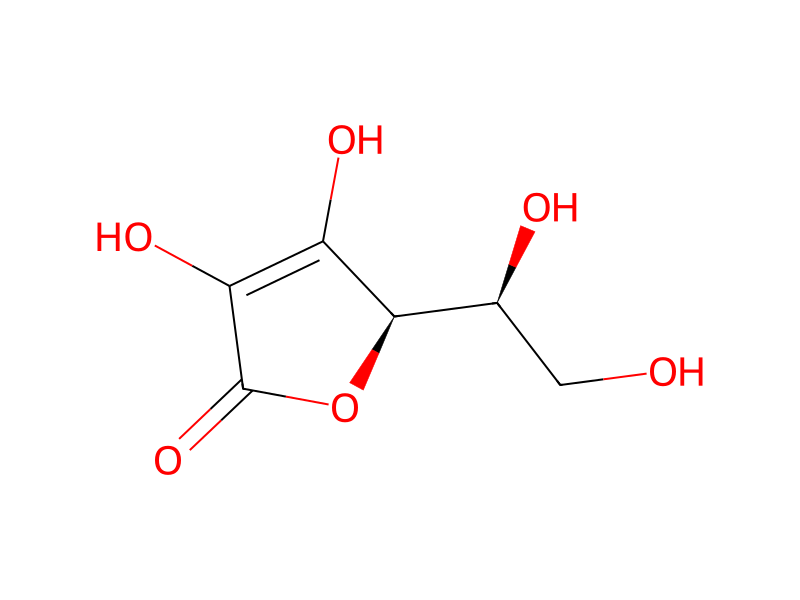
Product 1

Reagents, catalysts & solvents 2


Procedure
Ascorbic acid (89.2 g.) was slurried in 400 ml. of p-dioxane, 200 g. of zinc chloride were added slowly and the resulting mixture was stirred for one hour. Next, 100 ml. (104 g.) of benzaldehyde were added. This reaction mixture was stirred at ambient temperature for about 24 hours and was then extracted with 500 ml. of ethyl acetate. The ethyl acetate extract was itself extracted with three portions of saturated aqueous sodium chloride. The ethyl acetate solution was dried and the dried solution treated with activated charcoal and then filtered through cellulose. Concentration of the filtrate caused 5,6-O-benzylidene-L-ascorbic acid to crystallize.
Workup
- stirringThis reaction mixture was stirred at ambient temperature for about 24 hours
- extractionwas then extracted with 500 ml
- extractionThe ethyl acetate extract
- extractionextracted with three portions of saturated aqueous sodium chloride
- dry with materialThe ethyl acetate solution was dried
- additionthe dried solution treated with activated charcoal
- filtrationfiltered through cellulose
- customto crystallize
Sources & evidence
- ORD record
- ord-b1c0615a3a11477d8398fa1d213160cf
- Source dataset
- uspto-grants-1985_11
- Patent number
- US04552888
Reaction notes
Loading…