Hydrochloric Acid → HCID 57279758, compound
Reaction equation

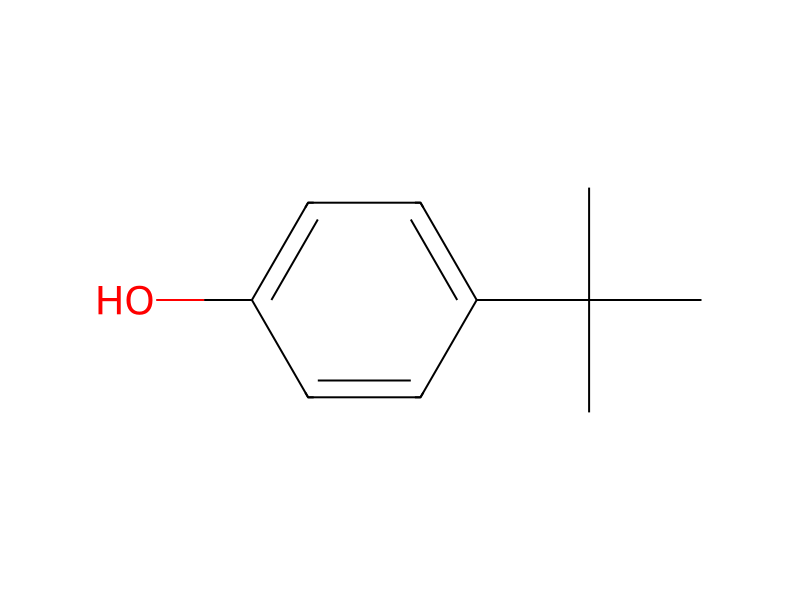
[C:1]([C:5]1[CH:10]=[CH:9][C:8]([OH:11])=[CH:7][CH:6]=1)([CH3:4])([CH3:3])[CH3:2].[Al].[C:13]1(=O)[CH2:18][CH2:17][CH2:16][CH2:15][CH2:14]1.Cl>O.C1(C)C(C)=CC=CC=1>[C:1]([C:5]1[CH:6]=[CH:7][C:8]([OH:11])=[C:9]([C:13]2[CH2:18][CH2:17][CH2:16][CH2:15][CH:14]=2)[CH:10]=1)([CH3:4])([CH3:2])[CH3:3]Participants
Reactant 4



Product 1

Reagents, catalysts & solvents 2


Conditions
- Temperature
- 100 °C
Procedure
15.0 g (0.10 mol) of 4-tert-butylphenol and 7.2 g (0.035 mol) of aluminium isopropylate are added to 100 ml of xylene under nitrogen. To remove the resulting isopropanol, 30 ml of solvent are distilled off. The reaction mixture is heated to 100° C. and charged with 9.8 g (0.10 mol) of cyclohexanone and is then refluxed for 20 hours. The reaction mixture is cooled and charged with 40 ml of water and 10 ml of concentrated hydrochloric acid. The organic phase is separated, washed with water, dried over magnesium sulfate and concentrated on a rotary evaporator. The residue is chromatographed over silica gel using the solvent system hexane/ethyl acetate=19:1 and the pure fractions are crystallised from methanol, giving 6.3 g (27%) of 4-tert-butyl-2-cyclohexen-1-yl-phenol, m.p. 90-93° C. (compound (109), Table 1).
Workup
- customTo remove the resulting isopropanol, 30 ml of solvent
- distillationare distilled off
- temperatureis then refluxed for 20 hours
- temperatureThe reaction mixture is cooled
- customThe organic phase is separated
- washwashed with water
- dry with materialdried over magnesium sulfate
- concentrationconcentrated on a rotary evaporator
- customThe residue is chromatographed over silica gel using the solvent system hexane/ethyl acetate=19:1
- customthe pure fractions are crystallised from methanol
Sources & evidence
- ORD record
- ord-f2d9bdd9bd1746d496562a212a2208b3
- Source dataset
- uspto-grants-1999_08
- Patent number
- US05932642
Reaction notes
Loading…