Isobutylene → HCID 21187905, compound
Reaction equation

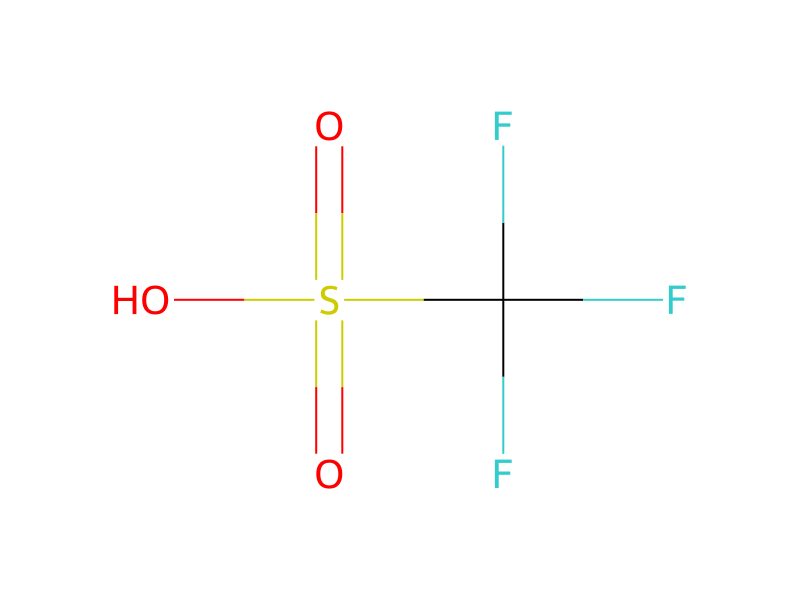
[CH3:1][C:2](=[CH2:4])[CH3:3].[OH:5][C:6]1[CH:7]=[C:8]([CH:13]=[CH:14][C:15]=1[O:16][CH3:17])[C:9]([O:11][CH3:12])=[O:10].FC(F)(F)S(O)(=O)=O.C(N(CC)CC)C>ClCCl>[C:2]([O:5][C:6]1[CH:7]=[C:8]([CH:13]=[CH:14][C:15]=1[O:16][CH3:17])[C:9]([O:11][CH3:12])=[O:10])([CH3:3])([CH3:1])[CH3:4]Participants
6
Reactant 4



Product 1

Reagents, catalysts & solvents 1

Conditions
- Temperature
- -70 °C
Procedure
A stirred solution of isobutylene (33 mL) in dichloromethane (60 mL) at -70° C. is treated dropwise with a cooled solution of methyl 3-hydroxy-4-methoxybenzoate (6 g) in dichloromethane (60 mL), followed by trifluoromethanesulfonic acid (0.3 mL). The reaction mixture is vigorously stirred at -70° C. for 3 hours and then between -70° C. and -50° C. overnight. It is then treated with triethylamine (0.6 mL) and allowed to warm to room temperature. The resulting yellow solution is concentrated, and the residue is subjected by mplc, using diethyl ether as eluent, to give methyl 3-tert-butoxy-4-methoxybenzoate (4.93 g), m.p. 98-100° C. [Elemental analysis: C,65.7; H,7.8%; calculated: C,65.5; H,7.6%].
Workup
- custombetween -70° C. and -50° C. overnight
- temperatureto warm to room temperature
- concentrationThe resulting yellow solution is concentrated
Sources & evidence
- ORD record
- ord-ec13f12c04894a2ba254eab9241d3451
- Source dataset
- uspto-grants-1999_08
- Patent number
- US05935978
Reaction notes
Loading…