Dimethylformamide → 3,5-Dichloro-4-pyridinecarboxaldehyde
Reaction equation

C(NC(C)C)(C)C.C([Li])CCC.[Cl:13][C:14]1[CH:15]=[N:16][CH:17]=[C:18]([Cl:20])[CH:19]=1.CN(C)[CH:23]=[O:24].[Cl-].[NH4+]>O1CCCC1>[Cl:13][C:14]1[CH:15]=[N:16][CH:17]=[C:18]([Cl:20])[C:19]=1[CH:23]=[O:24]Participants






Procedure
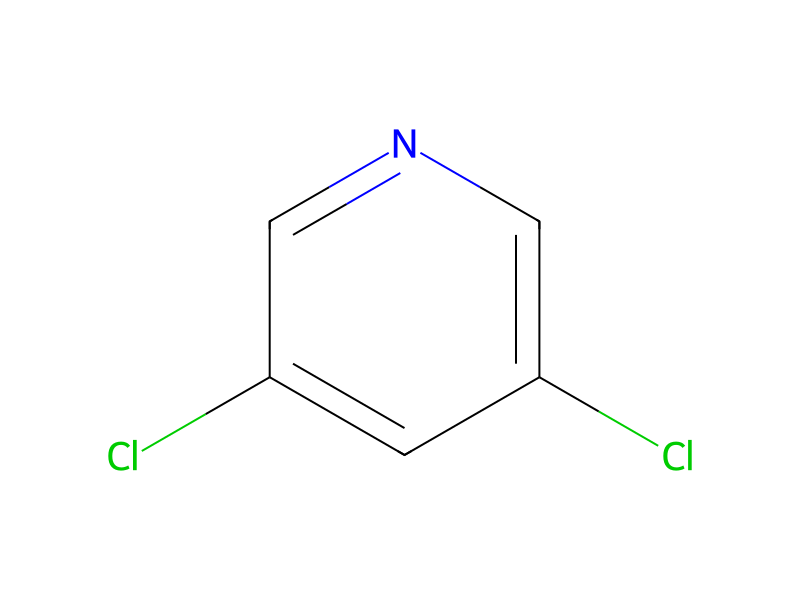
Under an argon atmosphere, to a solution of diisopropylamine (33.6 ml, 0.24 mol) in tetrahydrofuran (400 ml) at -65° C. was added a 1.6 M solution of n-butyl lithium in hexanes (156 ml). After 20 minutes later, a solution of 3,5-dichloropyridine (29.6 g, 0.20 mol) in tetrahydrofuran (150 ml) was added dropwise, and the mixture was stirred for 30 minutes. Subsequently, the mixture was treated with dimethylformamide (23.2 ml, 0.30 mol) in tetrahydrofuran (50 ml), and then stirred for one hour under the same conditions. The reaction mixture was poured into a 5% aqueous ammonium chloride solution (1,000 ml) and extracted with ethyl acetate. The organic layer was sequentially washed with water and saturated brine, dried, and then concentrated under reduced pressure. The residue was chromatographed on silica gel, to thereby obtain the title compound (27.2 g, yield 77%).
Workup
- stirringstirred for one hour under the same conditions
- extractionextracted with ethyl acetate
- washThe organic layer was sequentially washed with water and saturated brine
- customdried
- concentrationconcentrated under reduced pressure
- customThe residue was chromatographed on silica gel
Sources & evidence
- ORD record
- ord-434600ea948549a1a740e68f120bf864
- Source dataset
- uspto-grants-1999_08
- Patent number
- US05935977
Reaction notes
Loading…