Tetrahydrofuran → AzeOH D-tartrate
Reaction equation

[NH:1]1[CH2:7][CH2:6][CH:2]1[C:3]([OH:5])=[O:4].[C:8]([OH:17])(=[O:16])[C@H:9]([C@@H:11]([C:13]([OH:15])=[O:14])[OH:12])[OH:10].O1CCCC1>O>[NH:1]1[CH2:7][CH2:6][C@H:2]1[C:3]([OH:5])=[O:4].[C:13]([C@H:11]([C@@H:9]([C:8]([O-:17])=[O:16])[OH:10])[OH:12])([O-:15])=[O:14]Participants
5
Reactant 3


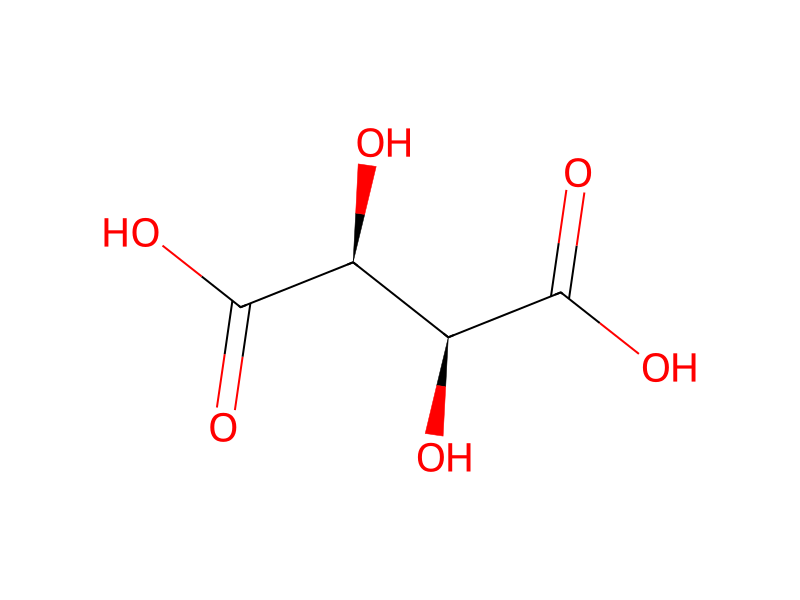
Product 1

Reagents, catalysts & solvents 1

Procedure
The method described in Example 1 above was followed using DL-AzeOH (2.9 g; 29 mmol), D-tartaric acid (4.3 g; 29 mmol), tetrahydrofuran (5.5 g) and water (4.5 g) to yield 3.9 g (109%, as calculated from the theoretical yield) of L-AzeOH-D-tartrate with a d.e. of 65%.
Workup
- customto yield 3.9 g (109%
Sources & evidence
- ORD record
- ord-d179819f018c42a680a31d33c21930d9
- Source dataset
- uspto-grants-1999_08
- Patent number
- US05942630
Reaction notes
Loading…