Trityl chloride → HCID 88465997, compound
Reaction equation

C1[O:3][CH:2]1[CH2:4][OH:5].[C:6](Cl)([C:19]1[CH:24]=[CH:23][CH:22]=[CH:21][CH:20]=1)([C:13]1[CH:18]=[CH:17][CH:16]=[CH:15][CH:14]=1)[C:7]1[CH:12]=[CH:11][CH:10]=[CH:9][CH:8]=1.[C:26](=[O:29])([OH:28])[O-].[K+]>N1C=CC=CC=1>[O:28]1[C:2]([CH2:4][OH:5])([OH:3])[CH:26]1[O:29][C:6]([C:19]1[CH:24]=[CH:23][CH:22]=[CH:21][CH:20]=1)([C:13]1[CH:18]=[CH:17][CH:16]=[CH:15][CH:14]=1)[C:7]1[CH:12]=[CH:11][CH:10]=[CH:9][CH:8]=1Participants
5
Reactant 3

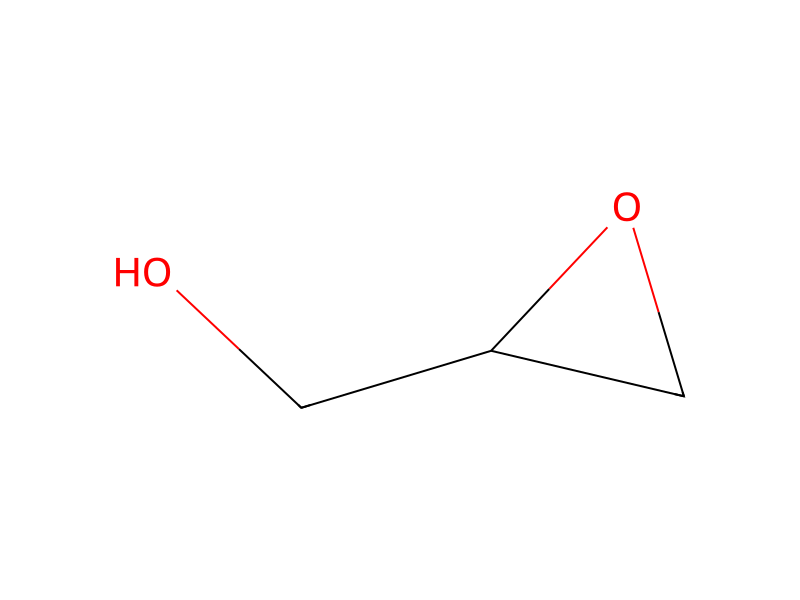

Product 1

Reagents, catalysts & solvents 1

Procedure
0.74 g of (RS)-glycidol and 2.8 g of trityl chloride in 5 ml of pyridine are reacted overnight. A solution of 2 g of potassium bicarbonate is then added while stirring. After evaporation, partition of the residue between water and methylene chloride and chromatography on silica gel with toluene there are obtained 2.25 g of (RS)-epoxy-1-O-tritylglycerol.
Workup
- customAfter evaporation
- custompartition of the residue between water and methylene chloride and chromatography on silica gel with toluene
Sources & evidence
- ORD record
- ord-576ed68887604420b8727e56cd3fce89
- Source dataset
- uspto-grants-1993_06
- Patent number
- US05215972
Reaction notes
Loading…