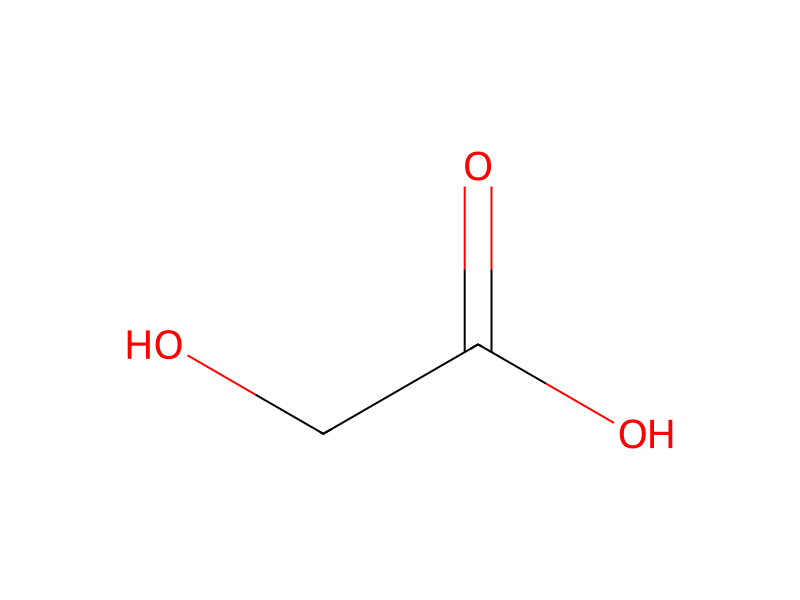
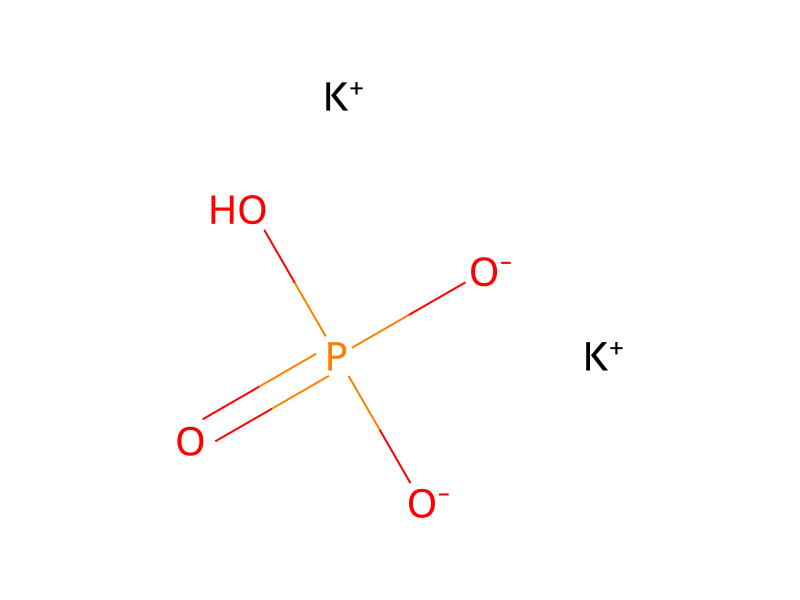
Glycolic Acid → Formate
Reaction equation

[C:1]([OH:5])(=[O:4])[CH2:2][OH:3].[OH:6]P([O-])([O-])=O.[K+].[K+].[C:13]([O-:17])(=[O:16])[CH2:14][OH:15]>>[C:1]([O-:5])(=[O:4])[CH:2]=[O:3].[C:14]([O-:6])(=[O:15])[C:13]([O-:17])=[O:16].[CH:1]([O-:5])=[O:4]Participants
6


Conditions
- Temperature
- 30 °C
Procedure
Into a 15 mL polypropylene centrifuge tube were placed 3 mL of an aqueous solution containing glycolic acid (3.3 mM), K2HPO4 (33 mM, pH 8.0), glycolate oxidase (spinach, 0.33 IU/mL), catalase (bovine liver, 1400 IU/mL), and FMN (0.01 mM). The solution was maintained at 30° C. in air, and 0.15 mL aliquots were removed, filtered through a Millipore 10,000 MW cutoff filter, and analyzed by HPLC. After 1 hour, the yields of glyoxylate, oxalate, and formate were 80.9%, 3.8%, and 0%, respectively, and 15.5% glycolate remained. After 2 hours, the yields of glyoxylate, oxalate, and formate were 80.6%, 19.7%, and 0%, respectively, and no glycolate remained.
Workup
- customInto a 15 mL polypropylene centrifuge tube were placed
- customwere removed
- filtrationfiltered through a Millipore 10,000 MW
- filtrationcutoff filter
Sources & evidence
- ORD record
- ord-f58a4b4076884d0ca40369679ed1bd02
- Source dataset
- uspto-grants-1993_06
- Patent number
- US05221621
Reaction notes
Loading…