Hydrochloric Acid → HCID 22314793, compound
Reaction equation

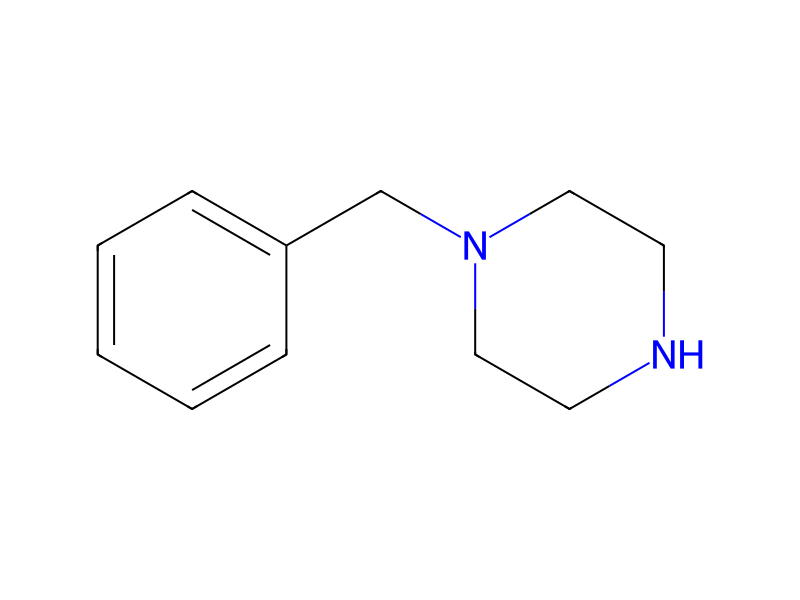
[CH2:1]([N:8]1[CH2:13][CH2:12][NH:11][CH2:10][CH2:9]1)[C:2]1[CH:7]=[CH:6][CH:5]=[CH:4][CH:3]=1.Cl.[C:15]1(=O)[CH2:20][CH2:19][CH2:18][CH2:17][CH2:16]1.[C-:22]#[N:23].[K+]>O>[CH2:1]([N:8]1[CH2:13][CH2:12][N:11]([C:15]2([C:22]#[N:23])[CH2:20][CH2:19][CH2:18][CH2:17][CH2:16]2)[CH2:10][CH2:9]1)[C:2]1[CH:3]=[CH:4][CH:5]=[CH:6][CH:7]=1Participants
6
Reactant 4



Product 1

Reagents, catalysts & solvents 1

Conditions
- Temperature
- 0 °C
Procedure
1-Benzylpiperazine (Aldrich) (6.12 g) was dissolved in 10 ml deionized water and cooled to 0° C. Concentrated hydrochloric acid (3.6 ml) was added to adjust the pH to 5. After warming to room temperature, 3.6 ml cyclohexanone was added, followed by potassium cyanide (2.4 g) in 6 ml deionized water. The solution slowly became cloudy. After 18 hours, the solid was filtered. The solid was dissolved in chloroform, dried over Na2SO4, filtered and the solvent was removed in vacuo to yield pure 1-benzyl-4-(1-cyanocyclohexyl) piperazine.
Workup
- temperatureAfter warming to room temperature
- filtrationthe solid was filtered
- dissolutionThe solid was dissolved in chloroform
- dry with materialdried over Na2SO4
- filtrationfiltered
- customthe solvent was removed in vacuo
Sources & evidence
- ORD record
- ord-044c43c8f2b3429082bc129e62e03458
- Source dataset
- uspto-grants-1993_06
- Patent number
- US05221629
Reaction notes
Loading…