Sodium Chloride → 4,6-Dichloro-N,N-diethyl-1,3,5-triazin-2-aminato
Reaction equation

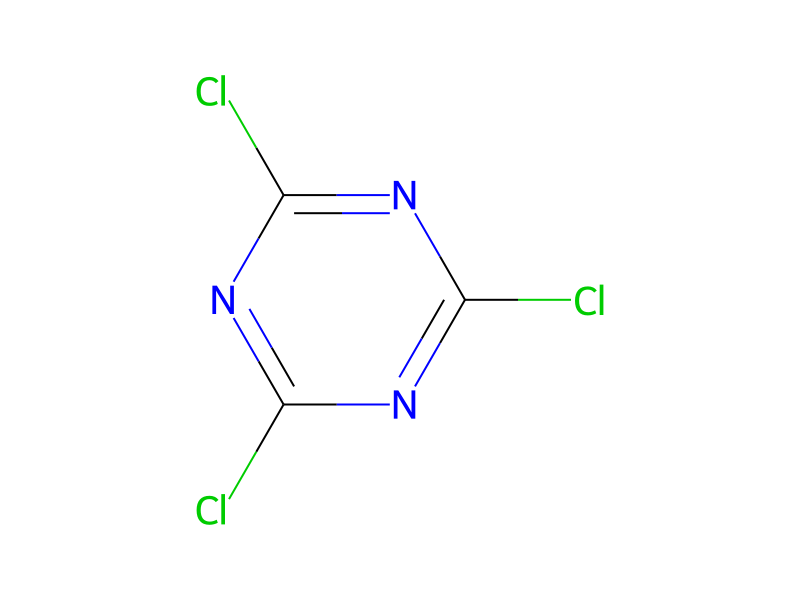
[N:1]1[C:8]([Cl:9])=[N:7][C:5](Cl)=[N:4][C:2]=1[Cl:3].[OH-].[Na+].[CH2:12]([NH:14][CH2:15][CH3:16])[CH3:13].[Cl-].[Na+]>C1(C)C=CC=CC=1.O>[Cl:9][C:8]1[N:1]=[C:2]([Cl:3])[N:4]=[C:5]([N:14]([CH2:15][CH3:16])[CH2:12][CH3:13])[N:7]=1Participants






Conditions
- Temperature
- 0 °C
Procedure
A mixture of 50.0 g (271 mmol) of cyanuric chloride, 22.0 g of 50% aqueous sodium hydroxide, 22 ml of water, and 150 ml of toluene, cooled to 0° C., is admixed with a solution of 19.8 g (271 mmol) of diethylamine in 25 ml of toluene over a 45 minute interval. The reaction temperature is maintained at 0°-5° C. throughout the addition. After the addition is complete, the reaction mixture is stirred for two hours at ambient temperature. Water is added to the mixture to dissolve the sodium chloride, and the phases are separated. The organic phase is dried over magnesium sulfate and concentrated to give an oil which is crystallized from heptane to give 42.0 g (70% yield) of 2,4-dichloro-6-diethylamino-1,3,5-triazine, a white crystalline material, m.p. 77°-9° C.
Workup
- temperatureThe reaction temperature is maintained at 0°-5° C. throughout the addition
- additionAfter the addition
- customthe phases are separated
- dry with materialThe organic phase is dried over magnesium sulfate
- concentrationconcentrated
- customto give an oil which
- customis crystallized from heptane
Sources & evidence
- ORD record
- ord-e1b5e6a41016429781451dd3f80a6300
- Source dataset
- uspto-grants-1993_04
- Patent number
- US05204473
Reaction notes
Loading…