Tetrahydrofuran → HCID 19766035, compound
Reaction equation

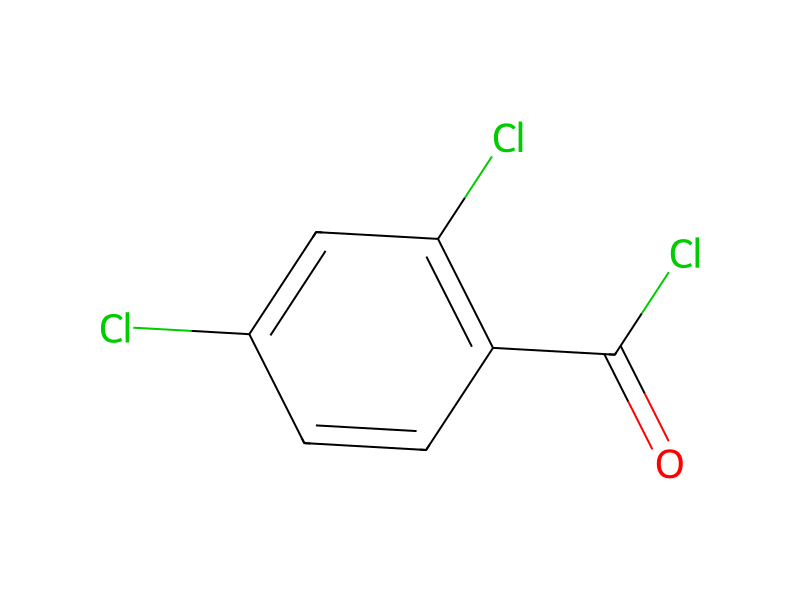
[Cl:1][C:2]1[CH:10]=[C:9]([Cl:11])[CH:8]=[CH:7][C:3]=1[C:4](Cl)=[O:5].Cl.[NH2:13][C:14]1[CH:20]=[CH:19][C:17]([OH:18])=[CH:16][C:15]=1O.[OH-].[Na+].C1COCC1>CO.O>[Cl:1][C:2]1[CH:10]=[C:9]([Cl:11])[CH:8]=[CH:7][C:3]=1[C:4]1[O:5][C:15]2[CH:16]=[C:17]([OH:18])[CH:19]=[CH:20][C:14]=2[N:13]=1Participants






Procedure
9.9 ml (70.5 mmol) of 2,4-dichlorobenzoyl chloride and 2.0 g (12.4 mmol) of 4-aminoresorcinol hydrochloride were introduced into a three-necked flask provided with a thermometer and a cooling condenser, and the mixture was heated at 172° to 247° C. for 1 hour, then excessive acid chloride was removed by distillation. To the residue, 6.47 g (161.8 mmol) of NaOH, 60 ml of THF, 60 μl of water and 30 ml of methanol were added, and the mixture was stirred at room temperature for about 2 hours. The reaction solution was extracted with ethyl acetate, the extract was washed with saturated sodium chloride water solution, and ethyl acetate was distilled off. Recrystallizing the residue with water/methanol/THF and drying the crystal, there was obtained 915 mg (3.27 mmol) of 2-(2,4-dichlorophenyl)-6-hydroxybenzoxazole. The yield was 26.3%.
Workup
- customprovided with a thermometer and a cooling condenser
- temperaturethe mixture was heated at 172° to 247° C. for 1 hour
- customexcessive acid chloride was removed by distillation
- extractionThe reaction solution was extracted with ethyl acetate
- washthe extract was washed with saturated sodium chloride water solution, and ethyl acetate
- distillationwas distilled off
- customRecrystallizing the residue with water/methanol/THF
- customdrying the crystal
Sources & evidence
- ORD record
- ord-66c66956c2e1451bbf9a2dac97e52f4a
- Source dataset
- uspto-grants-1993_04
- Patent number
- US05206149
Reaction notes
Loading…