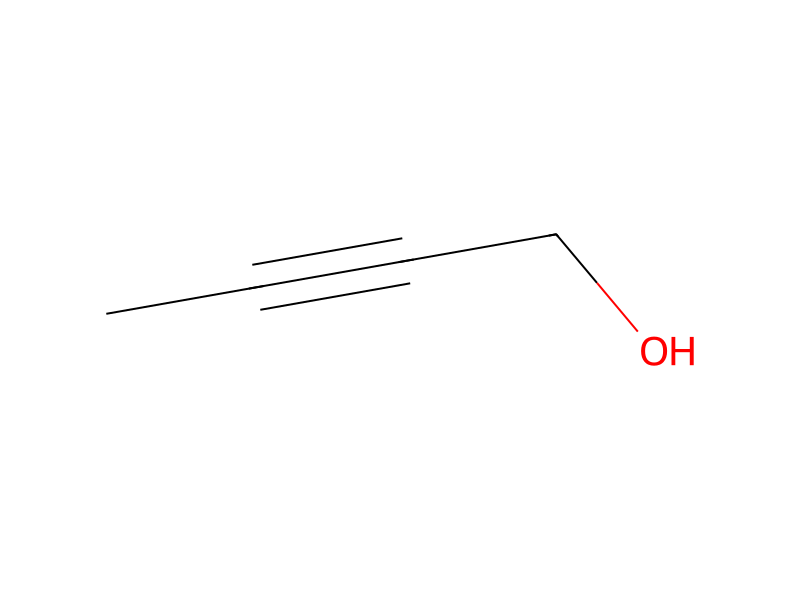
2-Butyn-1-ol → HCID 11608367, compound
Reaction equation

CS([C:5]1[N:9]=[C:8]([CH:10]2[CH2:15][CH2:14][CH2:13][CH2:12][CH2:11]2)[S:7][N:6]=1)(=O)=O.[CH2:16]([OH:20])[C:17]#[C:18][CH3:19].[H-].[Na+]>CN(C)C=O.[Cl-].[Na+].O>[CH:10]1([C:8]2[S:7][N:6]=[C:5]([O:20][CH2:16][C:17]#[C:18][CH3:19])[N:9]=2)[CH2:15][CH2:14][CH2:13][CH2:12][CH2:11]1Participants
6
Reactant 3


Product 1

Reagents, catalysts & solvents 2


Procedure
200 mg of 3-methylsulfonyl-5-cyclohexyl-1,2,4-thiadiazole and 63 mg of 2-butyn-1-ol were dissolved in 2 g of N,N-dimethylformamide, 39 mg of sodium hydride (60% in oil) was added thereto under ice-cooling, and the reaction mixture was stirred for 30 minutes under ice-cooling and for 1 hour at room temperature. Then, the reaction mixture was added to saturated brine, and extracted with t-butyl methyl ether. The organic layer was concentrated under reduced pressure, and the residue obtained was subjected to silica gel column chromatography to give 79 mg of 5-cyclohexyl-3-(2-butynyloxy)-1,2,4-thiadiazole (hereinafter referred to as the present invention compound (1)).
Workup
- temperatureunder ice-cooling
- extractionextracted with t-butyl methyl ether
- concentrationThe organic layer was concentrated under reduced pressure
- customthe residue obtained
Sources & evidence
- ORD record
- ord-0fc9c985a85842958f7215d271771f34
- Source dataset
- uspto-grants-2007_11
- Patent number
- US07301032B2
Reaction notes
Loading…