4-tert-Butylphenol → p-tert-Butylphenyl glycidyl ether
Reaction equation

[CH2:1]([CH:3]1[O:5][CH2:4]1)Cl.[C:6]([C:10]1[CH:15]=[CH:14][C:13]([OH:16])=[CH:12][CH:11]=1)([CH3:9])([CH3:8])[CH3:7].C(=O)([O-])[O-].[K+].[K+]>C(#N)C>[C:6]([C:10]1[CH:11]=[CH:12][C:13]([O:16][CH2:1][CH:3]2[CH2:4][O:5]2)=[CH:14][CH:15]=1)([CH3:9])([CH3:7])[CH3:8]Participants
5
Reactant 3
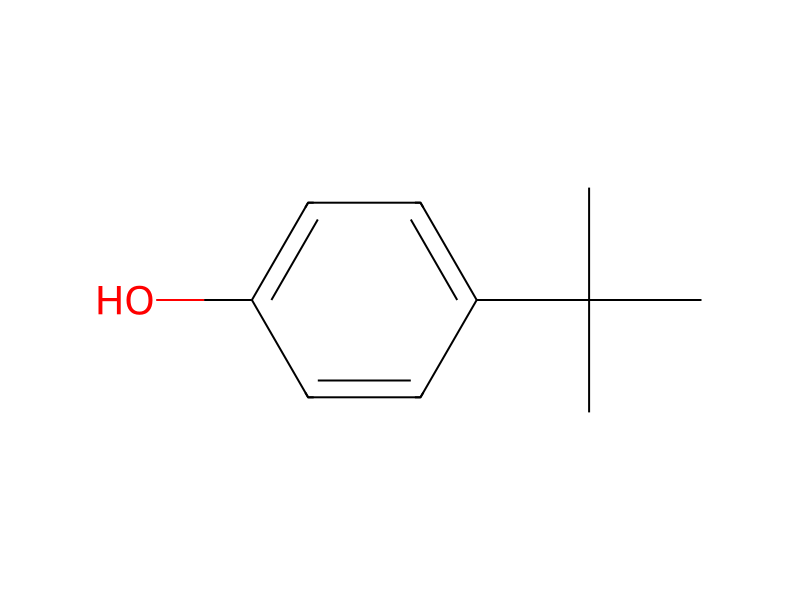


Product 1

Reagents, catalysts & solvents 1

Procedure
A mixture of epichlorohydrin (15.3 g; 0.165 mol), 4-tert-butylphenol (5.0 g; 0.033 mol) and potassium carbonate (6.9 g; 0.050 mol) in acetonitrile (50 mL) was refluxed for 5 h. The resulting heterogeneous mixture was cooled to below reflux temperature and vacuum filtered through fritted glass. The organics were concentrated to give the crude product (7.9 g) as a liquid. Flash chromatography on silica gel (CH2Cl2:EtOAc; 19:1) gave the desired product (5.2 g; 76%) as a liquid.
Workup
- temperaturewas refluxed for 5 h
- temperatureThe resulting heterogeneous mixture was cooled
- temperatureto below reflux temperature and vacuum
- filtrationfiltered through fritted glass
- concentrationThe organics were concentrated
- customto give the crude product (7.9 g) as a liquid
Sources & evidence
- ORD record
- ord-39d5e7b2d30a462a93536e6f1e65f847
- Source dataset
- uspto-grants-2001_09
- Patent number
- US06291475B1
Reaction notes
Loading…