Hydrochloric Acid → 6H-Benzo[e]naphth[2,1-c][1,2]oxaphosphorin, 6-chloro-
Reaction equation

[C:1]1([C:11]2[CH:16]=[CH:15][CH:14]=[CH:13][C:12]=2[OH:17])[C:10]2[C:5](=[CH:6][CH:7]=[CH:8][CH:9]=2)[CH:4]=[CH:3][CH:2]=1.[P:18](Cl)(Cl)[Cl:19].Cl>[Cl-].[Zn+2].[Cl-]>[Cl:19][P:18]1[C:2]2[CH:3]=[CH:4][C:5]3[C:10]([C:1]=2[C:11]2[CH:16]=[CH:15][CH:14]=[CH:13][C:12]=2[O:17]1)=[CH:9][CH:8]=[CH:7][CH:6]=3Participants
5
Reactant 3

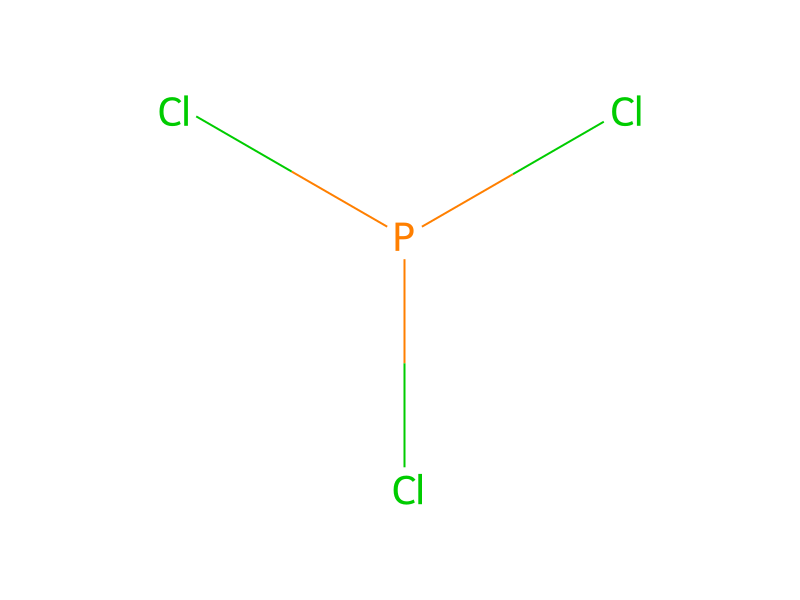

Product 1

Reagents, catalysts & solvents 1

Procedure
60 g (0.273 mol) of o-naphthylphenol and 0.6 g of zinc chloride are heated to 200° C. while stirring. 46 g (0.335 mol) of phosphorus trichloride are then added dropwise over a period of 5 hours and the mixture is subsequently stirred further for 4 hours under reflux. The off-gas (HCl) eliminated is conducted away. The mixture is then cooled and the excess phosphorus trichloride is distilled off under reduced pressure. The residue is distilled at a bath temperature of from 200° to 225° C. and 0.2 mbar by means of a bulb tube. This gives 51 g of 6-chloro-6H-benzo[e]naphth[2,1-c][1,21]oxaphosphorin which solidify in crystalline form. This corresponds to a yield of 66% of theory.
Workup
- stirringthe mixture is subsequently stirred further for 4 hours
- temperatureunder reflux
- temperatureThe mixture is then cooled
- distillationthe excess phosphorus trichloride is distilled off under reduced pressure
- distillationThe residue is distilled at a bath temperature of from 200° to 225° C. and 0.2 mbar by means of a bulb tube
Sources & evidence
- ORD record
- ord-3809c7691ba1411db42cc22cd506fe17
- Source dataset
- uspto-grants-1998_04
- Patent number
- US05739372
Reaction notes
Loading…