HCID 86752428, compound → Benzeneacetic acid, 2-[3-(1-pyrrolidinyl)propoxy]-
Reaction equation

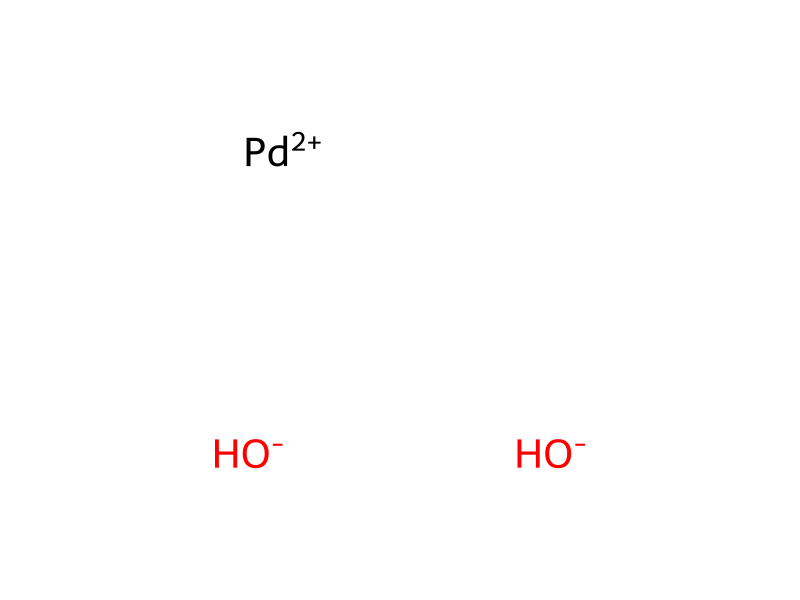
[N:1]1([CH2:6][CH2:7][CH2:8][O:9][C:10]2[CH:15]=[CH:14][CH:13]=[CH:12][C:11]=2[CH2:16][C:17]([O:19]CC2C=CC=CC=2)=[O:18])[CH2:5][CH2:4][CH2:3][CH2:2]1>C(OCC)(=O)C.ClCCl.[OH-].[OH-].[Pd+2]>[N:1]1([CH2:6][CH2:7][CH2:8][O:9][C:10]2[CH:15]=[CH:14][CH:13]=[CH:12][C:11]=2[CH2:16][C:17]([OH:19])=[O:18])[CH2:5][CH2:4][CH2:3][CH2:2]1Participants




Conditions
- Temperature
- 50 °C
Procedure
0.8 g of 10% palladium hydroxide on carbon is added to a solution of 5.3 g of benzyl {2-[3-(1-pyrrolidinyl)propoxy]phenyl}acetate in 50 cm3 of ethyl acetate and 50 cm3 of dichloromethane, and the mixture is heated to 50° C. and then purged with nitrogen. After hydrogen has been bubbled through for 20 hours, the suspension is cooled to room temperature and purged with a stream of nitrogen, then filtered and concentrated to dryness under reduced pressure (2.7 kPa). The oily residue obtained is chromatographed on an alumina column (particle size 100 mesh, height 30 cm, diameter 4.5 cm), eluting under a pressure of 0.7 bar of nitrogen with a mixture of cyclohexane and ethyl acetate (75:25 by volume) and collecting fractions of 100 cm3. Fractions 1 to 6 are concentrated to dryness under reduced pressure (2.7 kPa). 2.9 g of {2-[3-(1-pyrrolidinyl)propoxy]phenyl}acetic acid are obtained in the form of a thick oil.
Workup
- custompurged with nitrogen
- customAfter hydrogen has been bubbled through for 20 hours
- temperaturethe suspension is cooled to room temperature
- custompurged with a stream of nitrogen
- filtrationfiltered
- concentrationconcentrated to dryness under reduced pressure (2.7 kPa)
- customThe oily residue obtained
- customis chromatographed on an alumina column (particle size 100 mesh, height 30 cm, diameter 4.5 cm)
- washeluting under a pressure of 0.7 bar of nitrogen with a mixture of cyclohexane and ethyl acetate (75:25 by volume)
- customcollecting fractions of 100 cm3
- concentrationFractions 1 to 6 are concentrated to dryness under reduced pressure (2.7 kPa)
Sources & evidence
- ORD record
- ord-6ef8770355f44fc2b4b3618f8badf5eb
- Source dataset
- uspto-grants-1998_04
- Patent number
- US05739351
Reaction notes
Loading…