Acetone → HCID 67686069, compound
Reaction equation

[CH:1]1[C:6]([OH:7])=[CH:5][CH:4]=[C:3]([CH3:8])[CH:2]=1.[C:9]1([CH2:17][OH:18])[C:10](CO)=[CH:11][CH:12]=[CH:13][CH:14]=1.C[C:20](C)=[O:21]>CS(O)(=O)=O.O>[CH:5]1[C:6]([OH:7])=[CH:1][CH:2]=[C:3]([CH3:8])[CH:4]=1.[OH:18][CH2:17][C:9]1[CH:14]=[CH:13][C:12]([CH2:20][OH:21])=[CH:11][CH:10]=1Participants
Reactant 3



Product 1

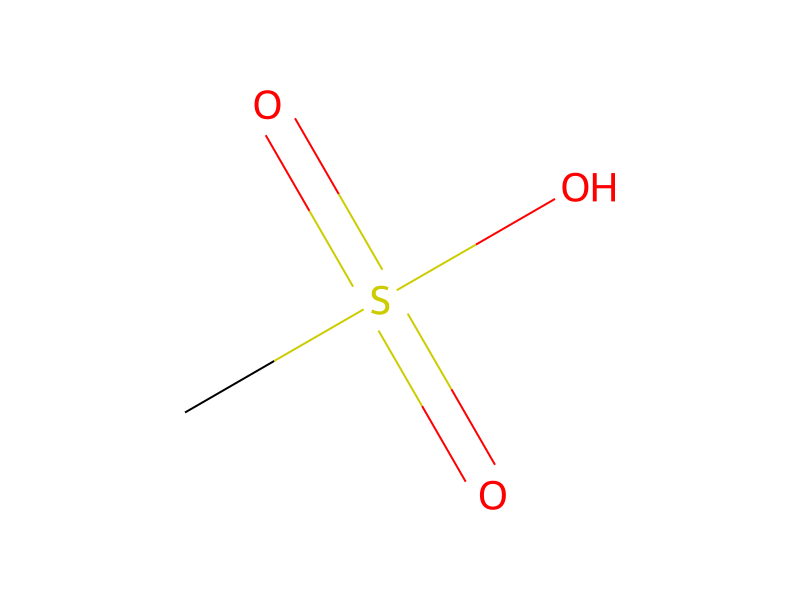
Reagents, catalysts & solvents 2

Conditions
- Temperature
- 95 °C
Procedure
38.4 g (0.36 mol) of p-cresol and 35.0 g (0.25 mol) of xylene-α,α'-diol were dissolved under heating, then 0.15 g of methanesulfonic acid was added thereto at 90-100° C. and the mixture was stirred and reacted at the same temperature for 2 hours. After cooling, 100 ml of acetone was poured into and dissolved in the reaction solution and then the solution was poured into 2,000 ml of water, stirred and then allowed to stand, after which the supernatant was decanted and the residue was dissolved in 100 ml of acetone, poured into 2,000 ml of water and stirred. The solution was allowed to stand, the supernatant was decanted and the residue was evaporated to dryness under reduced pressure to give 65.0 g of p-cresol/1,4-dihydroxymethylbenzene polycondensate as faintly yellow-tinted powdery crystals. Mw≈6,700; Mw/Mn=3.50 (GPC with polystyrene calibration).
Workup
- temperatureunder heating
- customreacted at the same temperature for 2 hours
- temperatureAfter cooling
- dissolutiondissolved in the reaction solution
- stirringstirred
- customafter which the supernatant was decanted
- dissolutionthe residue was dissolved in 100 ml of acetone
- additionpoured into 2,000 ml of water
- stirringstirred
- customthe supernatant was decanted
- customthe residue was evaporated to dryness under reduced pressure
Sources & evidence
- ORD record
- ord-23ef266077a64b2b850810f79d67f88e
- Source dataset
- uspto-grants-1999_11
- Patent number
- US05976759
Reaction notes
Loading…