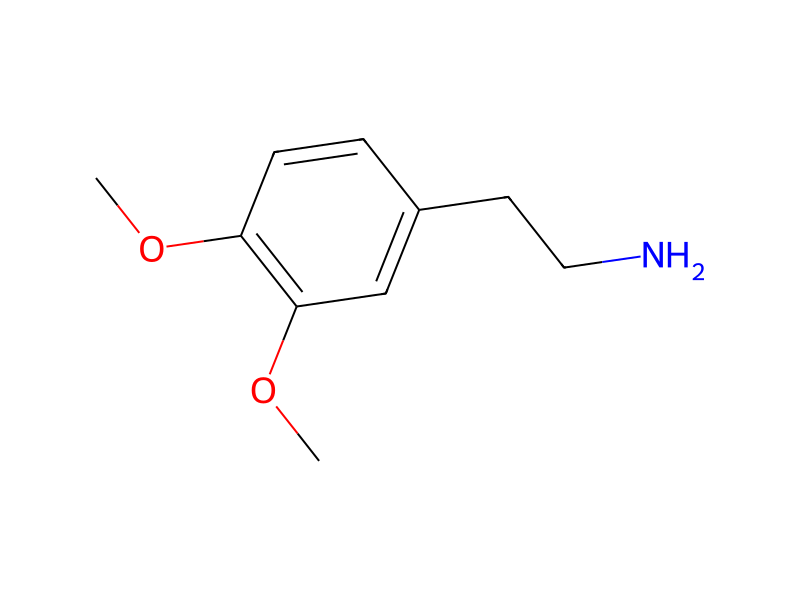
Homoveratrylamine → SB-237376
Reaction equation

[Cl:1][CH2:2][CH2:3][CH2:4][NH:5][C:6](=[O:16])[C:7]1[CH:12]=[CH:11][C:10]([N+:13]([O-:15])=[O:14])=[CH:9][CH:8]=1.[CH2:17]([NH2:29])[CH2:18][C:19]1[CH:28]=[CH:27][C:24]([O:25][CH3:26])=[C:21]([O:22][CH3:23])[CH:20]=1.C(N(CC)CC)C>C(Cl)Cl>[ClH:1].[CH3:23][O:22][C:21]1[CH:20]=[C:19]([CH2:18][CH2:17][NH:29][CH2:2][CH2:3][CH2:4][NH:5][C:6](=[O:16])[C:7]2[CH:12]=[CH:11][C:10]([N+:13]([O-:15])=[O:14])=[CH:9][CH:8]=2)[CH:28]=[CH:27][C:24]=1[O:25][CH3:26]Participants
5
Reactant 3


Product 1

Reagents, catalysts & solvents 1

Procedure
A solution of 10.62 g (44 mmol) N-(3-chloropropyl)-4-nitrobenzamide (D3), 8.1 g (45 mmol) homoveratrylamine and 6.26 ml triethylamine in 200 ml methylene chloride was refluxed for 48 h. The solvent was then concentrated in vacuo and the residue dissolved in water. The aqueous phase was first washed with methylene chloride, then made basic with aqueous NaOH and finally extracted twice with methylene chloride. This second organic phase was dried over MgSO4 and concentrated in vacuo affording 12 g of a crude residue. This residue was purified by chromatography on silicagel using CH2Cl2 /MeOH/NH4OH: 85/10/5 to afford 4.4 g of the title compound as an yellow oil (free base).
Workup
- concentrationThe solvent was then concentrated in vacuo
- dissolutionthe residue dissolved in water
- washThe aqueous phase was first washed with methylene chloride
- extractionfinally extracted twice with methylene chloride
- dry with materialThis second organic phase was dried over MgSO4
- concentrationconcentrated in vacuo
- customaffording 12 g of a crude residue
- customThis residue was purified by chromatography on silicagel
Sources & evidence
- ORD record
- ord-23ba9b4686454633b0a023f2fe66b624
- Source dataset
- uspto-grants-1999_11
- Patent number
- US05977179
Reaction notes
Loading…