Potassium Carbonate → 4-(3-Butyl-1,4-dihydro-4-oxo-quinolinyl methyl)-benzonitrile
Reaction equation

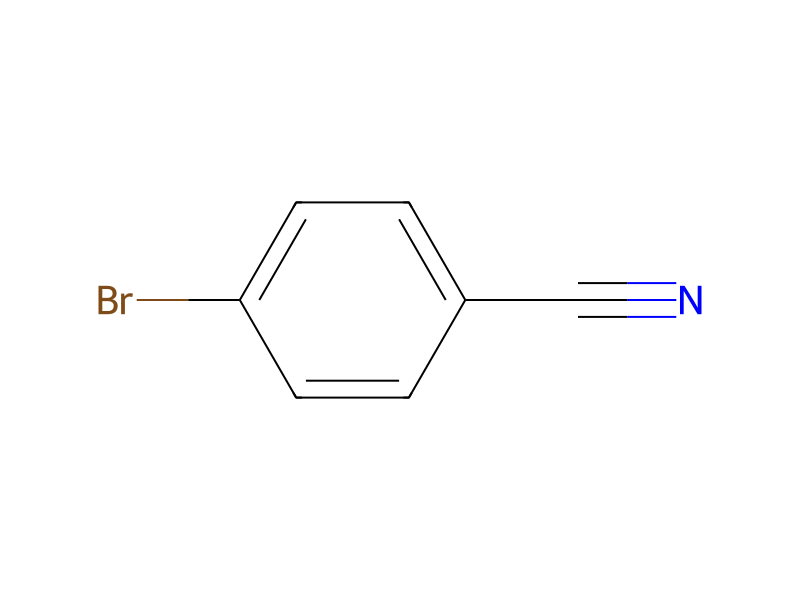
[C:1](=O)([O-])[O-].[K+].[K+].[CH2:7]([C:11]1[C:20](=[O:21])[C:19]2[C:14](=[CH:15][CH:16]=[CH:17][CH:18]=2)[NH:13][CH:12]=1)[CH2:8][CH2:9][CH3:10].Br[C:23]1[CH:30]=[CH:29][C:26]([C:27]#[N:28])=[CH:25][CH:24]=1>CC(C)=O>[CH2:7]([C:11]1[C:20](=[O:21])[C:19]2[C:14](=[CH:15][CH:16]=[CH:17][CH:18]=2)[N:13]([CH2:1][C:23]2[CH:30]=[CH:29][C:26]([C:27]#[N:28])=[CH:25][CH:24]=2)[CH:12]=1)[CH2:8][CH2:9][CH3:10]Participants
5




Procedure
3.3 g of activated potassium carbonate were added to a suspension of 2.3 g of the product of Step E in 50 ml of acetone a the mixture was stirred for 10 minutes. Then, 4.7 g of 4-bromobenzonitrile were added, followed by heating for 4 hours at reflux. The acetone was evaporated off and the residue was taken up in 100 ml of water. Extraction was carried out with ethyl acetate and the extracts were washed with a saturated solution of ammonium chloride, dried and evaporated to dryness to obtain 4.1 g of the expected product which was chromatographed on silica (eluant: methylene chloride-methanol (98-2)) to obtain 3.3 g of the desired product melting at 168° C.
Workup
- temperatureby heating for 4 hours
- temperatureat reflux
- customThe acetone was evaporated off
- extractionExtraction
- washthe extracts were washed with a saturated solution of ammonium chloride
- customdried
- customevaporated to dryness
Sources & evidence
- ORD record
- ord-ed6aad7ef91740ed8914cefcfa7eeb73
- Source dataset
- uspto-grants-1999_11
- Patent number
- US05985894
Reaction notes
Loading…