Ammonia → (-)-Mandelic acid
Reaction equation

N.[CH:2](=[O:10])[C:3]1[C:4](=[CH:6][CH:7]=[CH:8][CH:9]=1)O.ClC1C=C(Cl)C=C(C=O)[C:13]=1[OH:21].C[OH:23]>C(#N)C.O.C(O)(C)C.C(O)C>[C:13]([OH:21])(=[O:23])[C@@H:2]([C:3]1[CH:4]=[CH:6][CH:7]=[CH:8][CH:9]=1)[OH:10]Participants


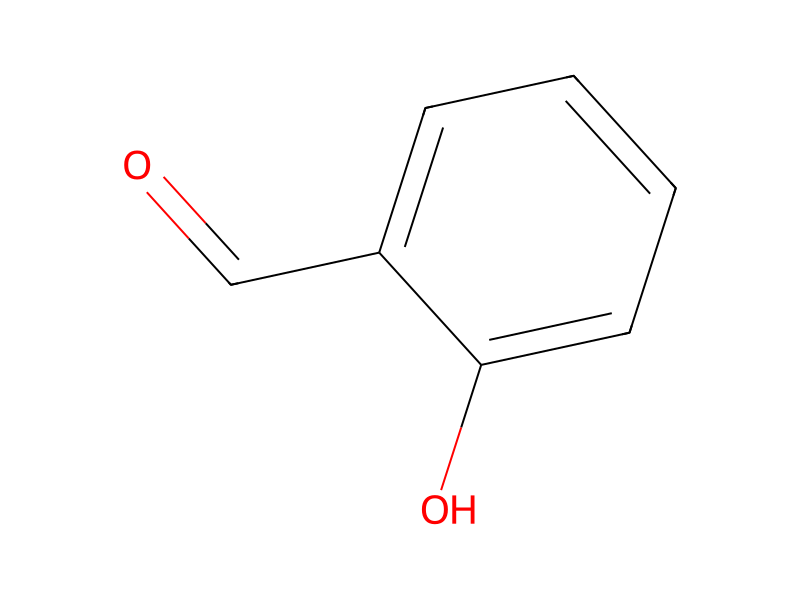






Procedure
The cyclization of 1a and 1b is then performed. For the cyclization of 1a, it was found that the addition of 50 wt. % aqueous sodium hydroxide (2.3 equivalents) to the reaction mixture solution led cleanly and rapidly to the bromolactam 2. Cyclization of 1 b was found to be best achieved by the addition of K2CO3 (2 equivalents) to the reaction mixture. Compound 2 was obtained as a solution in acetonitrile after filtration of the inorganic salts from either cyclization conditions. Aminolysis is achieved by subjecting 2 to a large excess of ammonium hydroxide. Thus, when the solution of compound 2 in acetonitrile is mixed with 17 equivalents of ammonia, the reaction proceeds smoothly at 40° C. in 6 hours. The work up of this reaction for the subsequent isolation of (racemic)-3 is achieved in the following way: distillation of acetonitrile and ammonium hydroxide, neutralization, azeotropic distillation with acetonitrile or toluene, and filtration of the inorganic salts. Addition of (R)-mandelic acid (MA) to the final solution leads to the precipitation of the salt (racemic)-3, which is isolated by filtration with an overall yield ranging from 60 to 70%. The dynamic resolution is achieved using the preformed salt (racemic)-3 and salicylaldehyde or 3,5-dichlorosalicylaldehyde as the aromatic aldehyde in alcohol solvents. Solvents such as methanol, ethanol or isopropanol (IPA) at their respective reflux temperature are suitable for achieving this type of transformation. The preferred results were found with IPA as the solvent, which gave the shortest reaction time and highest ee and salicylaldehyde, as it is easier to handle and more economic than 3,5-dichlorosalicylaldehyde. An excess of MA and a small amount of water results in shorter reaction time and higher optical purity of the isolated salt 4. The dynamic resolution which follows was found to be ineffective if a small amount of water was not included in the reaction. The preferred conditions (IPA at reflux temperature 3.25% H2O, 7.75% excess MA); resulted in a high yield (78%) and high ee (>96%). The synthesis was completed by treatment of 4 with concentrated HCl in ethyl acetate at 50° C. for 1 hour to afford the desired product 5 in 98% yield. The present invention results in an easy and cost effective synthesis of the lactam molecule with high ee (>96%) and good overall yield (49%).
Workup
- filtrationafter filtration of the inorganic salts from either cyclization conditions
- customThe work up of this reaction for the subsequent isolation of (racemic)-3
- distillationdistillation of acetonitrile and ammonium hydroxide, neutralization, azeotropic distillation
- filtrationwith acetonitrile or toluene, and filtration of the inorganic salts
- additionAddition of (R)-mandelic acid (MA) to the final solution
- customleads to the precipitation of the salt (racemic)-3
- customwhich is isolated by filtration with
- customan overall yield
- customThe preferred results
- customgave
Sources & evidence
- ORD record
- ord-277954c20e7b4070b343e72a33a84e6c
- Source dataset
- uspto-grants-1999_11
- Patent number
- US05986107
Reaction notes
Loading…