Acetone → 3-(2'-Ethylcaproyloxy)-propyltriethoxysilane
Reaction equation

[CH2:1]([OH:4])[CH:2]=[CH2:3].[C:5]1([CH3:15])[CH:10]=[CH:9][C:8](S(O)(=O)=O)=[CH:7][CH:6]=1.[CH2:16]([O:18][SiH:19]([O:23][CH2:24][CH3:25])[O:20][CH2:21][CH3:22])[CH3:17].[SiH4].[H][H].C[C:30](C)=[O:31]>C1C=CC=CC=1.O=C(C=C(C)C)C.[Pt](Cl)Cl>[CH2:7]([CH:8]([CH2:9][CH2:10][CH2:5][CH3:15])[C:30]([O:4][CH2:1][CH2:2][CH2:3][Si:19]([O:23][CH2:24][CH3:25])([O:20][CH2:21][CH3:22])[O:18][CH2:16][CH3:17])=[O:31])[CH3:6]Participants
Reactant 5



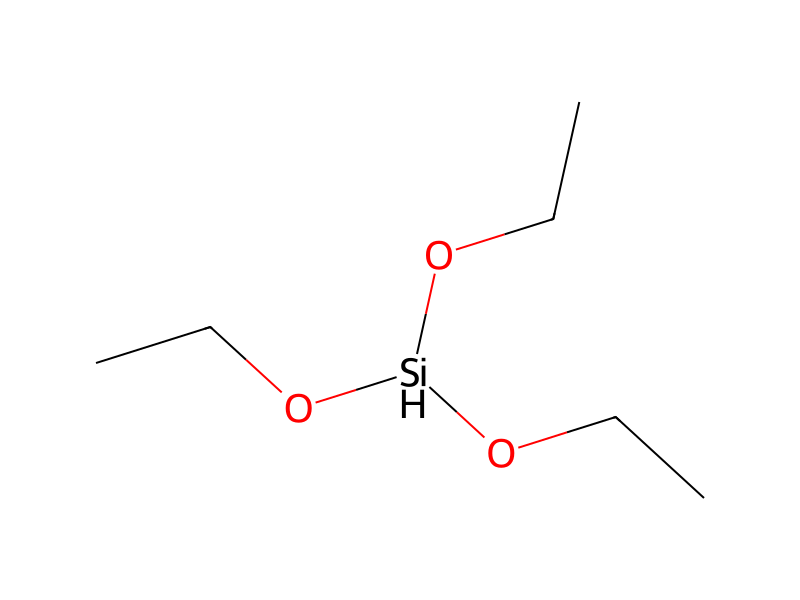

Product 1

Reagents, catalysts & solvents 2


Conditions
- Temperature
- 75 °C
Procedure
184 G of 2-ethylcapronic acid allyl ester (prepared from the free acid and allyl alcohol by azeotropic esterification in benzene in the presence of p-toluenesulfonic acid; BP18 : 95°C; nD20 : 1.4298) was heated to 75°C in a 3-necked flask provided with stirrer, reflux condenser, internal thermometer and dropping funnel. Then 0.1 ml of an 0.01 molar solution of mesityl oxide-platinum dichloride catalyst complex in acetone was stirred in, and a quantity of 164 g of triethoxysilane was fed in from the dropping funnel within a 6-minute period, during which the temperature rose to 99°C. 10 minutes after the triethoxysilane feed was completed, no more silane hydrogen was analytically detectable. Vaccuum distillation of the product yielded 322 g of 3-(2'-ethylcaproyloxy)-propyltriethoxysilane, BP1 : 134°-138°C.
Workup
- custom95°C
- customprovided with stirrer
- temperaturereflux condenser
- waitwas fed in from the dropping funnel within a 6-minute period, during which
- customrose to 99°C
- custom10 minutes
- distillationVaccuum distillation of the product
Sources & evidence
- ORD record
- ord-4f702248bd7842a5b6c116c3b3512e6e
- Source dataset
- uspto-grants-1976_04
- Patent number
- US03950364
Reaction notes
Loading…