Formaldehyde → t-Butyl 2-(2-phenylethyl)acrylate
Reaction equation

C([Li:5])CCC.[CH:6]([NH:9][CH:10]([CH3:12])[CH3:11])([CH3:8])[CH3:7].C(=O)=O.CC(C)=O.[C:20]([O:24][C:25](=[O:38])[CH:26]([CH2:30][CH2:31][C:32]1[CH:37]=[CH:36][CH:35]=[CH:34][CH:33]=1)[C:27](=O)C)([CH3:23])([CH3:22])[CH3:21].C=O>O1CCCC1>[CH:6]([N-:9][CH:10]([CH3:12])[CH3:11])([CH3:8])[CH3:7].[Li+:5].[C:20]([O:24][C:25](=[O:38])[C:26](=[CH2:27])[CH2:30][CH2:31][C:32]1[CH:33]=[CH:34][CH:35]=[CH:36][CH:37]=1)([CH3:23])([CH3:22])[CH3:21]Participants
Reactant 5



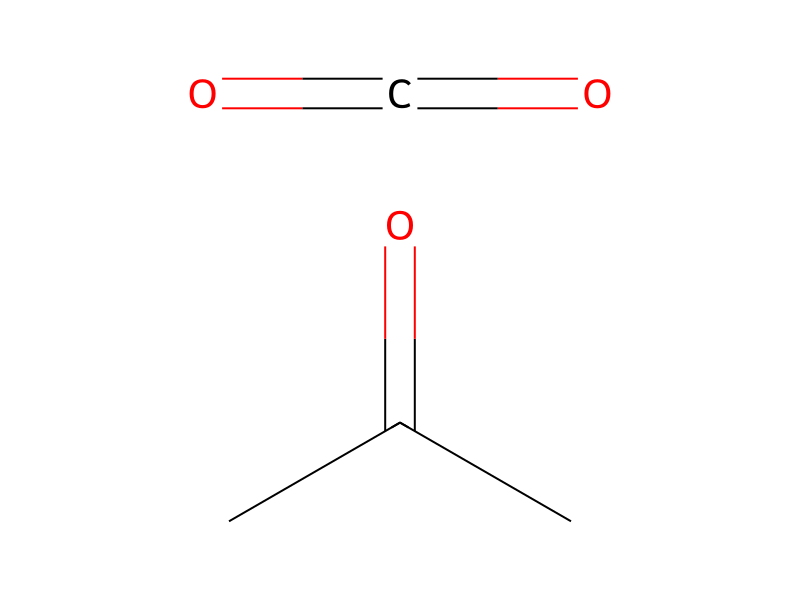

Product 2


Reagents, catalysts & solvents 1

Procedure
A solution of lithium diisopropylamide in tetrahydrofuran was prepared by addition of n-butyllithium (4.2 ml, 11 mmol) to a solution of diisopropylamine (1.1 g, 11 mmol) in anhydrous THF (22 ml) cooled to -78° (dry-ice acetone bath). After additon of t-butyl-2-(2-phenylethyl)-3-oxobutyrate (2.62 g, 10 mmol), the mixture was stirred for 10 minutes, then dry paraformaldehyde (1.4 g) was added all at once. The mixture was allowed to warm to room temperature, stirred for one hour at this temperature, then heated at reflux for one hour. The mixture was cooled, filtered, and concentrated, and the residue was purified by chromatography on neutral alumina, giving the title product (0.62 g, 2.7 mmol, 27%) as a colorless oil. NMR (CDCl3); 1.48 (9H,s), 2.3-3.0 (4H,m), 5.2 (1H, broad s), 6.05 (1H,d,J=1Hz), 7.13 (5H,s). IR (CHCl3); 1700, 1630, 1590 cm- 1. MS (m/e); 232 (M+).
Workup
- temperatureheated
- temperatureat reflux for one hour
- temperatureThe mixture was cooled
- filtrationfiltered
- concentrationconcentrated
- customthe residue was purified by chromatography on neutral alumina
Sources & evidence
- ORD record
- ord-8ff730ce5dda4e32873f706c355d0905
- Source dataset
- uspto-grants-1989_09
- Patent number
- US04866087
Reaction notes
Loading…