Hydrochloric Acid → Ethyl 4-hydroxy-4-(thiophen-2-yl)piperidine-1-carboxylate
Reaction equation

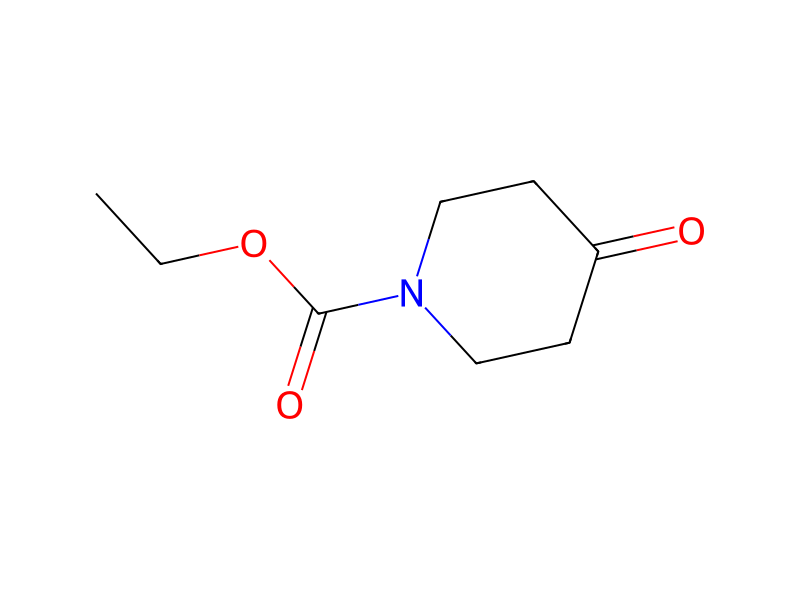
ClCCCCC1C2C(=CC=CC=2)NC=1.BrCCCCC1C2C(=CC=CC=2)NC=1.[S:29]1[CH:33]=[CH:32][CH:31]=[C:30]1C1CCNCC=1.Cl.[O:41]=[C:42]1[CH2:47][CH2:46][N:45]([C:48]([O:50][CH2:51][CH3:52])=[O:49])[CH2:44][CH2:43]1>>[OH:41][C:42]1([C:30]2[S:29][CH:33]=[CH:32][CH:31]=2)[CH2:43][CH2:44][N:45]([C:48]([O:50][CH2:51][CH3:52])=[O:49])[CH2:46][CH2:47]1Participants
6



Procedure
A solution of 2.08 g of 3-(4-chlorobutyl)indole [or 2.52 g of 3-(4-bromobutyl)indole] and 1.65 g of 4-(2-thienyl)-1,2,3,6-tetrahydropyridine [hydrochloride, m.p. 242°; obtainable by reaction of 2-thienyl-Li with ethyl 4-oxo-1-piperidinecarboxylate to give ethyl 4-hydroxy-4-(2-thienyl)-1-piperidinecarboxylate, alkaline elimination of the protective group and dehydration with hydrochloric acid] in 10 ml of acetonitrile is stirred at 20° for 12 hours, worked up as usual and 3-[4-(4-(2-thienyl)-1,2,3,6-tetrahydropyridyl)butyl]indole is obtained; hydrochloride ("T"), Rf 0.52.
Sources & evidence
- ORD record
- ord-fc4406aced744b77bf67828bf4e6d262
- Source dataset
- uspto-grants-1989_09
- Patent number
- US04870087
Reaction notes
Loading…