Potassium Hydroxide → 4,5-Dichloro-2-[(4-methoxyphenyl)methyl]pyridazin-3-one
Reaction equation

[Cl:1][C:2]1[C:3](=[O:9])[NH:4][N:5]=[CH:6][C:7]=1[Cl:8].[K].[OH-].[K+].[CH3:13][O:14][C:15]1[CH:22]=[CH:21][C:18]([CH2:19]Cl)=[CH:17][CH:16]=1>CO.C1(C)C=CC=CC=1.[Br-].C([N+](CCCC)(CCCC)CCCC)CCC.C(OCC)(=O)C>[Cl:1][C:2]1[C:3](=[O:9])[N:4]([CH2:19][C:18]2[CH:21]=[CH:22][C:15]([O:14][CH3:13])=[CH:16][CH:17]=2)[N:5]=[CH:6][C:7]=1[Cl:8]Participants
Reactant 4

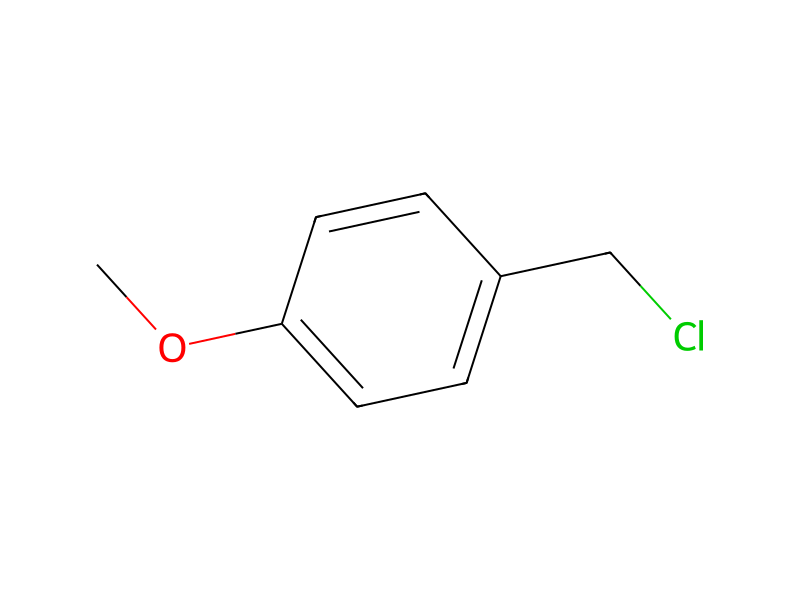


Product 1

Reagents, catalysts & solvents 4




Procedure
1.65 g (10 mmoles) of 4,5-dichloro-3(2H)-pyridazinone are converted into potassium salt with an equimolar amount of potassium hydroxide dissolved in methanol, and the methanol is removed in vacuo. To the suspension of the salt in 30 ml of toluene a solution of 1.56 g (10 mmoles) of 4-methoxybenzyl chloride in 30 ml of toluene is dropped under stirring, then 0.6 g (1.8 mmole) of tetrabutyl ammonium bromide is added. The reaction mixture is boiled for 3 hours under reflux cooling and evaporated to dryness in vacuo. The residue is dissolved in water, then the solution is extracted with ethyl acetate, dried and evaporated. The crude product thus obtained is optionally subjected to column chromatography on a silica gel column using ethyl acetate as solvent. Thus 1.17 g (41% ) of the desired compound are obtained. M.p.: 117°-120° C.
Workup
- customthe methanol is removed in vacuo
- additionis dropped
- temperatureunder reflux
- temperaturecooling
- customevaporated to dryness in vacuo
- dissolutionThe residue is dissolved in water
- extractionthe solution is extracted with ethyl acetate
- customdried
- customevaporated
- customThe crude product thus obtained
Sources & evidence
- ORD record
- ord-b2bae42bc95a47faa5c39af890f815dd
- Source dataset
- uspto-grants-1995_03
- Patent number
- US05395934
Reaction notes
Loading…