Water → 2-isopropyl-phenyl acetate
Reaction equation

[CH:1]([C:4]1[CH:9]=[CH:8][CH:7]=[CH:6][C:5]=1[OH:10])([CH3:3])[CH3:2].C(N(CC)CC)C.[C:18](Cl)(=[O:20])[CH3:19].O>C(OCC)(=O)C>[C:18]([O:10][C:5]1[CH:6]=[CH:7][CH:8]=[CH:9][C:4]=1[CH:1]([CH3:3])[CH3:2])(=[O:20])[CH3:19]Participants
6
Reactant 4


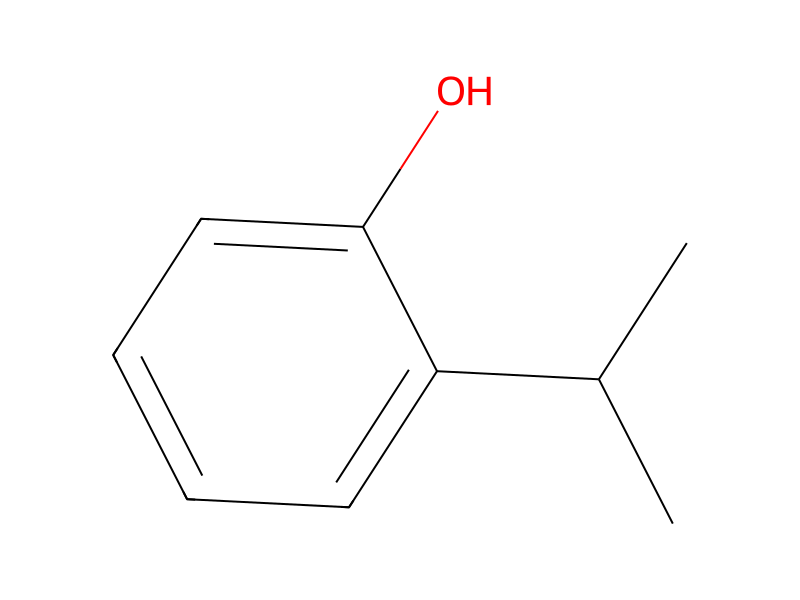

Product 1

Reagents, catalysts & solvents 1

Procedure
2-Isopropylphenol (5.0 kg, 36.7 mol) is dissolved in ethyl acetate (20.8 L) and to this is added triethylamine (4.48 kg, 44.1 mmol). This solution is cooled to -12° and to this is added acetyl chloride (3.15 kg, 40.2 tool) over a period of 2.5 hours keeping the temperature below -10°. Triethylamine hydrochloride precipitates immediately. After the addition is complete stirring is continued for 1 hour at 15° at which time a solid mass is formed. This is dissolved by the addition of water (12L). After separation of the layers the organic layer is further washed with water (233 12L) and evaporated in vacuo (50°, 2 Torr) and then at 70°, 2 Torr to give 2-isopropyl-phenyl acetate as a residual amber oil.
Workup
- temperatureThis solution is cooled to -12°
- customthe temperature below -10°
- customTriethylamine hydrochloride precipitates immediately
- additionAfter the addition
- customa solid mass is formed
- customAfter separation of the layers the organic layer
- washis further washed with water (233 12L)
- customevaporated in vacuo (50°, 2 Torr)
Sources & evidence
- ORD record
- ord-c881b72bff8d493396c44d844ade62e1
- Source dataset
- uspto-grants-1995_03
- Patent number
- US05401772
Reaction notes
Loading…