Imidazole → 3-Chloro-6-(1H-imidazol-1-yl)pyridazine
Reaction equation

[NH:1]1[CH:5]=[CH:4][N:3]=[CH:2]1.[Cl:6][C:7]1[N:8]=[N:9][C:10](Cl)=[CH:11][CH:12]=1.C([O-])([O-])=O.[K+].[K+]>CN(C=O)C>[Cl:6][C:7]1[N:8]=[N:9][C:10]([N:1]2[CH:5]=[CH:4][N:3]=[CH:2]2)=[CH:11][CH:12]=1Participants
5
Reactant 3


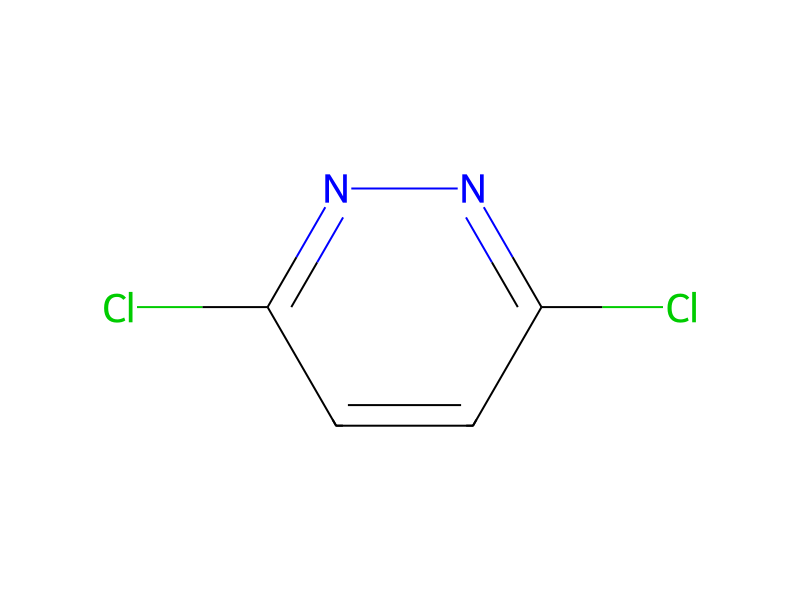
Product 1

Reagents, catalysts & solvents 1

Conditions
- Temperature
- 75 °C
Procedure
A mixture of imidazole (0.613 g, 8 mmol) and 3,6-dichloropyridazine (1.55 g, 10 mmol), K2CO3 (4.15 g) and DMF (15 mL) was heated at 70-80° C. overnight. After removal of DMF in vacuo, the residual solid was dissolved in CH2Cl2 (50 mL), washed with 1N Na2CO3 aq. solution, and dried (MgSO4). Separation using column chromatography (CH2Cl2/methanol 100:1) afforded 3-chloro-6-(imidazol-1-yl)pyridazine (1.2 g) as a white solid.
Workup
- customAfter removal of DMF in vacuo
- dissolutionthe residual solid was dissolved in CH2Cl2 (50 mL)
- washwashed with 1N Na2CO3 aq. solution
- dry with materialdried (MgSO4)
- customSeparation
Sources & evidence
- ORD record
- ord-e0c76ea6186d4352971ef7efa4ba6026
- Source dataset
- uspto-grants-2006_01
- Patent number
- US06982259B2
Reaction notes
Loading…