Pyrogallol → 3-(Benzyloxy)benzene-1,2-diol
Reaction equation

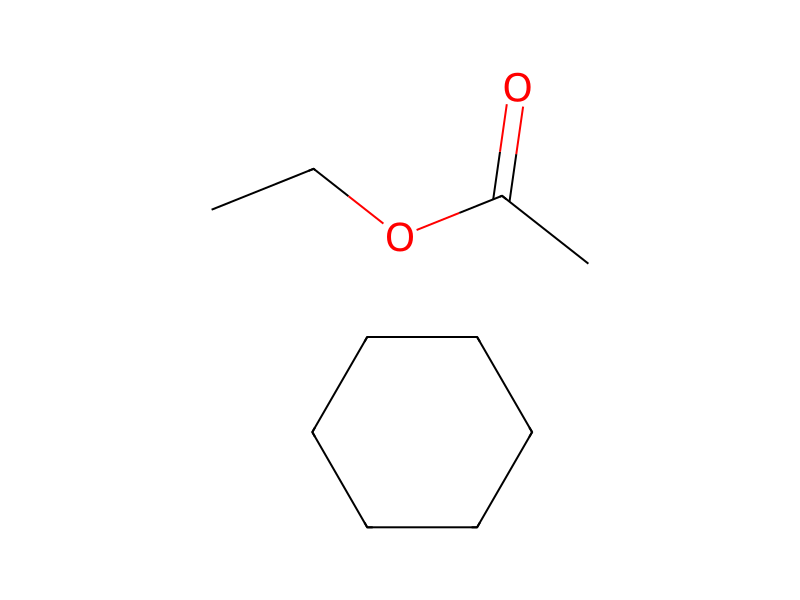
[C:1]1([CH:9]=[CH:8][CH:7]=[C:5]([OH:6])[C:3]=1[OH:4])[OH:2].B(OCC)(OCC)OCC.[CH2:20](Br)[C:21]1[CH:26]=[CH:25][CH:24]=[CH:23][CH:22]=1>C(OC(=O)C)C.C1CCCCC1>[CH2:20]([O:2][C:1]1[CH:9]=[CH:8][CH:7]=[C:5]([OH:6])[C:3]=1[OH:4])[C:21]1[CH:26]=[CH:25][CH:24]=[CH:23][CH:22]=1Participants
5
Reactant 3



Product 1

Reagents, catalysts & solvents 1
Procedure
Using the procedure of Example 13, 25.22 g of pyrogallol, 35.1 ml of triethyl borate and 23.76 ml of benzyl bromide were reacted to obtain 33.8 g of the expected product in the form of a thick red oil after chromatography on silica eluting with a cyclohexane - ethyl acetate (6-4) mixture (Yield: 78%).
Workup
- customwere reacted
Sources & evidence
- ORD record
- ord-afab7cd2eb86424fa011bb25e42cdd54
- Source dataset
- uspto-grants-1993_03
- Patent number
- US05198571
Reaction notes
Loading…