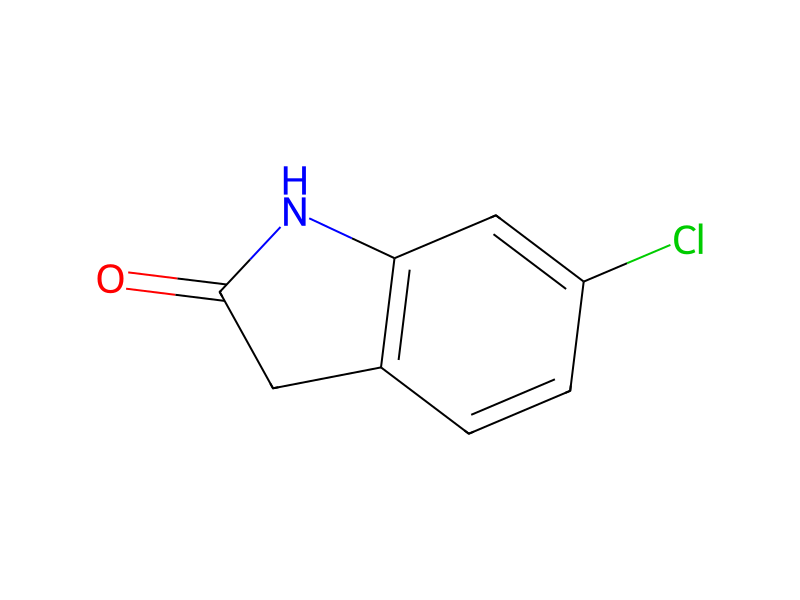
6-Chloro-1,3-dihydroindol-2-one → HCID 178517231, compound
Reaction equation

[Cl:1][C:2]1[CH:10]=[C:9]2[C:5]([CH2:6][C:7](=[O:11])[NH:8]2)=[CH:4][CH:3]=1.[NH:12]1[C:20]2[C:15](=[CH:16][CH:17]=[C:18]([CH:21]=O)[CH:19]=2)[CH:14]=[N:13]1>>[NH:12]1[C:20]2[C:15](=[CH:16][CH:17]=[C:18](/[CH:21]=[C:6]3/[C:7](=[O:11])[NH:8][C:9]4[C:5]/3=[CH:4][CH:3]=[C:2]([Cl:1])[CH:10]=4)[CH:19]=2)[CH:14]=[N:13]1Participants
3


Procedure
The title compound was synthesized according to the method described for Example A11B except substituting 6-chlorooxindole (30 mg, 0.179 mmol) and 1H-indazole-6-carbaldehyde (29 mg, 0.197 mmol) to obtain 22 mg (42%) of a yellow solid. 1H NMR (400 MHz, d6-DMSO) δ 13.30 (s, 1H), 10.79 (s, 1H), 8.16 (s, 1H), 7.90-7.87 (m, 2H), 7.83 (s, 1H), 7.56 (d, J=8.00 Hz, 1H), 7.41 (d, J=8.80 Hz, 1H), 6.93-6.88 (m, 2H); MS ESI 296.0 [M+H]+, calcd for [C16H10ClN3O+H]+ 296.06.
Sources & evidence
- ORD record
- ord-a5f091f8b1244202bb6d5244250997be
- Source dataset
- uspto-grants-2014_07
- Patent number
- US08765748B2
Reaction notes
Loading…