Ethyl Acetate → HCID 67205348, compound
Reaction equation

Br[C:2]1[CH:10]=[C:9]2[C:5]([CH:6]=[CH:7][NH:8]2)=[CH:4][CH:3]=1.C(=O)([O-])[O-].[K+].[K+].CC1(C)C(C)(C)OB([C:25]2[CH:30]=[C:29]([N+:31]([O-:33])=[O:32])[CH:28]=[CH:27][C:26]=2[CH3:34])O1.C(OCC)(=O)C>CN(C=O)C.O.C1C=CC(P(C2C=CC=CC=2)[C-]2C=CC=C2)=CC=1.C1C=CC(P(C2C=CC=CC=2)[C-]2C=CC=C2)=CC=1.Cl[Pd]Cl.[Fe+2].O>[CH3:34][C:26]1[CH:25]=[CH:30][C:29]([N+:31]([O-:33])=[O:32])=[CH:28][C:27]=1[C:2]1[CH:10]=[C:9]2[C:5]([CH:6]=[CH:7][NH:8]2)=[CH:4][CH:3]=1Participants
Reactant 4




Product 1

Reagents, catalysts & solvents 3


Procedure
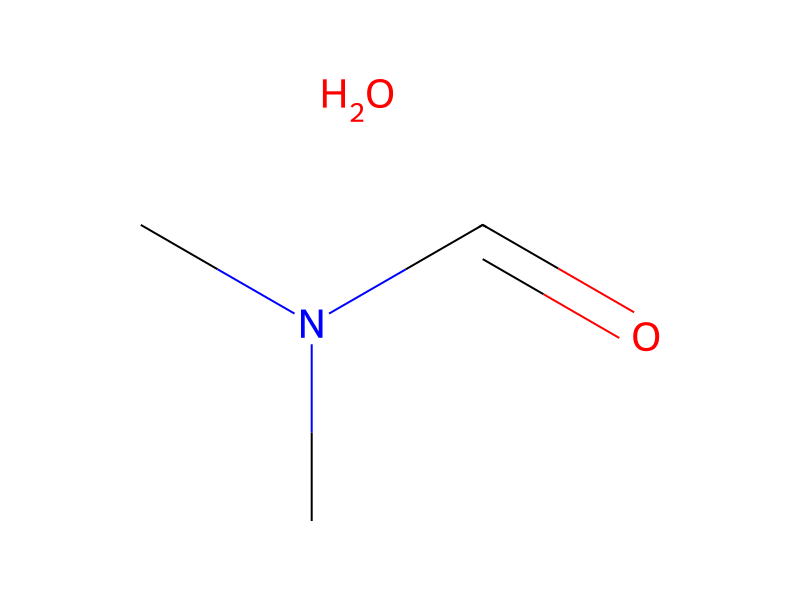
6-Bromo-1H-indole (203 mg, 1.04 mmol) and potassium carbonate (287 mg, 2.08 mmol) was dissolved in a DMF/water (4:1, 2.5 mL) mixture solution, and the gas included in the mixture solution was removed using ultrasonic wave and nitrogen gas. After sequentially adding 4,4,5,5-tetramethyl-2-(2-methyl-5-nitrophenyl)-1,3,2-dioxaborolane (300 mg, 1.14 mmol) and Pd(dppf)Cl2 (85 mg, 0.10 mmol), the mixture was stirred at room temperature in a sealed reactor. 2 hours later, after adding ethyl acetate and water, the reaction solution was filtered through a diatomite pad. The organic layer was separated and the aqueous layer was extracted with ethyl acetate. The combined organic layer was dried with anhydrous magnesium sulfate and then concentrated. Purification of the residue by chromatography (silica gel, EA:Hx=1:4) yielded 6-(2-methyl-5-nitrophenyl)-1H-indole (170 mg) as brown solid.
Workup
- customwas removed
- filtrationthe reaction solution was filtered through a diatomite pad
- customThe organic layer was separated
- extractionthe aqueous layer was extracted with ethyl acetate
- dry with materialThe combined organic layer was dried with anhydrous magnesium sulfate
- concentrationconcentrated
- customPurification of the residue by chromatography (silica gel, EA:Hx=1:4)
Sources & evidence
- ORD record
- ord-a1c7a106305947a0aa75a3a7c44c133b
- Source dataset
- uspto-grants-2014_07
- Patent number
- US08765749B2
Reaction notes
Loading…