Water → methyl(S)-3-tert-butoxycarbonylamino-2-morpholin-4-ylpropanoate
Reaction equation

Cl[CH2:2][CH2:3][O:4][CH2:5][CH2:6]Cl.[NH2:8][C@@H:9]([CH2:14][NH:15][C:16]([O:18][C:19]([CH3:22])([CH3:21])[CH3:20])=[O:17])[C:10]([O:12][CH3:13])=[O:11].O>C(N(C(C)C)CC)(C)C>[C:19]([O:18][C:16]([NH:15][CH2:14][C@H:9]([N:8]1[CH2:6][CH2:5][O:4][CH2:3][CH2:2]1)[C:10]([O:12][CH3:13])=[O:11])=[O:17])([CH3:22])([CH3:21])[CH3:20]Participants
5

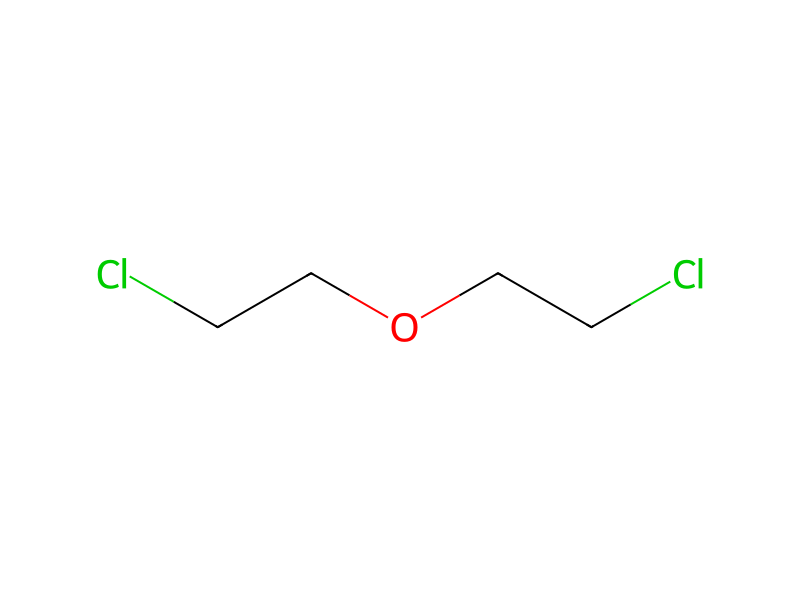



Conditions
- Temperature
- 127 °C
Procedure
2.8 g (20 mmol) of 1-chloro-2-(2-chloroethoxy)ethane are added to a solution of 5 g (20 mmol) of commercial methyl(S)-2-amino-3-tert-butoxycarbonylaminopropanoate in 65 ml of diisopropylethylamine. The reaction mixture is stirred at 127° C. for 18 h. After the addition of water, the reaction medium is extracted with ethyl acetate. The organic phases are combined, dried over sodium sulfate, filtered and evaporated. The residue obtained is purified by chromatography on silica gel, elution being carried out with a 70/30 heptane/ethyl acetate mixture. 1.4 g (24%) of methyl(S)-3-tert-butoxycarbonylamino-2-morpholin-4-ylpropanoate are obtained in the form of an oil.
Workup
- extractionthe reaction medium is extracted with ethyl acetate
- dry with materialdried over sodium sulfate
- filtrationfiltered
- customevaporated
- customThe residue obtained
- customis purified by chromatography on silica gel, elution
Sources & evidence
- ORD record
- ord-1fab35d85d4e444faac3bb95a0ba71ef
- Source dataset
- uspto-grants-2014_07
- Patent number
- US08772478B2
Reaction notes
Loading…