Hydrochloric Acid → (2-isopropyl-1-(2-methyl-3-(trifluoromethyl)benzyl)-6-morpholino-1H-benzo[d]imidazol-4-yl)boronic acid
Reaction equation

Br[C:2]1[C:10]2[N:9]=[C:8]([CH:11]([CH3:13])[CH3:12])[N:7]([CH2:14][C:15]3[CH:20]=[CH:19][CH:18]=[C:17]([C:21]([F:24])([F:23])[F:22])[C:16]=3[CH3:25])[C:6]=2[CH:5]=[C:4]([N:26]2[CH2:31][CH2:30][O:29][CH2:28][CH2:27]2)[CH:3]=1.[B:32]1(B2OC(C)(C)C(C)(C)O2)[O:36]C(C)(C)C(C)(C)[O:33]1.CC(C1C=C(C(C)C)C(C2C=CC=CC=2P(C2CCCCC2)C2CCCCC2)=C(C(C)C)C=1)C.C([O-])(=O)C.[K+].Cl>O1CCOCC1.C1C=CC(/C=C/C(/C=C/C2C=CC=CC=2)=O)=CC=1.C1C=CC(/C=C/C(/C=C/C2C=CC=CC=2)=O)=CC=1.C1C=CC(/C=C/C(/C=C/C2C=CC=CC=2)=O)=CC=1.[Pd].[Pd].O>[CH:11]([C:8]1[N:7]([CH2:14][C:15]2[CH:20]=[CH:19][CH:18]=[C:17]([C:21]([F:23])([F:24])[F:22])[C:16]=2[CH3:25])[C:6]2[CH:5]=[C:4]([N:26]3[CH2:27][CH2:28][O:29][CH2:30][CH2:31]3)[CH:3]=[C:2]([B:32]([OH:36])[OH:33])[C:10]=2[N:9]=1)([CH3:13])[CH3:12]Participants
Reactant 5




Product 1

Reagents, catalysts & solvents 3



Conditions
- Temperature
- 95 °C
Procedure
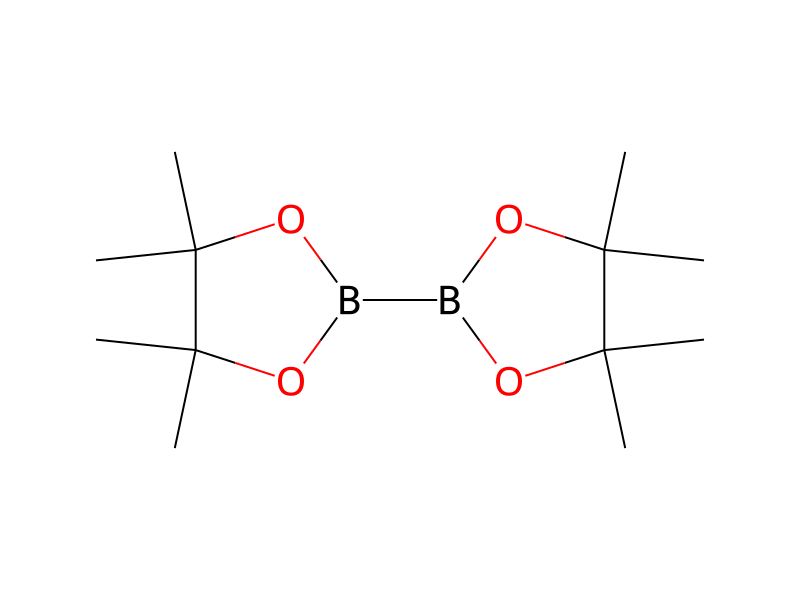
A mixture of 4-(4-bromo-2-isopropyl-1-(2-methyl-3-(trifluoromethyl)benzyl)-1H-benzo[d]imidazol-6-yl)morpholine (1.01 g, 2.035 mmol), bis(pinacolato)diboron (1.550 g, 6.10 mmol), Pd2(dba)3 (0.093 g, 0.102 mmol), X-Phos (0.097 g, 0.203 mmol) and potassium acetate (0.599 g, 6.10 mmol) in 1,4-Dioxane (20 mL) in a 40 mL scintillation vial was heated for 1 hr at 95° C. When cooled, the reaction contents were poured into 1N HCl (3 ml) and H2O (3 mL) mixture, swirled and then extracted with EtOAc, dried over MgSO4 and concentrated in-vacuo. The residue was dissolved in MeOH and the material was purified by reverse phase chromatography eluting with a gradient 30% CH3CN to 60% CH3CN over 10 minutes. The fractions containing clean desired compound were combined and concentrated in vacuo to provide the desired product (178 mg, 0.386 mmol, 18.96% yield) as an off-white solid. Additional fractions, containing less pure desired product—contaminated with des-boronylated product as determined by LC/MS—were combined and the CH3CN was removed in-vacuo leaving the material in H2O. Upon standing a white solid fell out of the resulting solution. The white solid was collected by filtration, dried in a vacuum oven to yield (2-isopropyl-1-(2-methyl-3-(trifluoromethyl)benzyl)-6-morpholino-1H-benzo[d]imidazol-4-yl)boronic acid (296 mg, 0.642 mmol, 31.5% yield). The total yield of desired product was (474 mg, 1.03 mmol, 50.5% yield). MS (ES+) m/e: 461.2, 462.3 [M+H]+; 1H NMR (400 MHz, METHANOL-d4) δ ppm 7.67 (d, J=7.83 Hz, 1H), 7.47-7.60 (m, 1H), 7.27 (s, 1H), 7.10 (d, J=2.27 Hz, 1H), 6.63 (d, J=7.83 Hz, 1H), 5.85 (s, 2H), 3.72-3.85 (m, 4H), 3.57 (s, 1H), 3.10-3.24 (m, 4H), 2.62 (s, 3H), 1.45 (d, J=7.07 Hz, 6H).
Workup
- temperatureWhen cooled
- customthe reaction contents
- extractionextracted with EtOAc
- dry with materialdried over MgSO4
- concentrationconcentrated in-vacuo
- dissolutionThe residue was dissolved in MeOH
- customthe material was purified by reverse phase chromatography
- washeluting with a gradient 30% CH3CN to 60% CH3CN over 10 minutes
- additionThe fractions containing clean desired compound
- concentrationconcentrated in vacuo
Sources & evidence
- ORD record
- ord-b1d67bcdc91b47d5bfa73b7125c891f5
- Source dataset
- uspto-grants-2014_07
- Patent number
- US08778937B2
Reaction notes
Loading…