3-Bromopyridine-4-carboxaldehyde → 1255957-49-3
Reaction equation

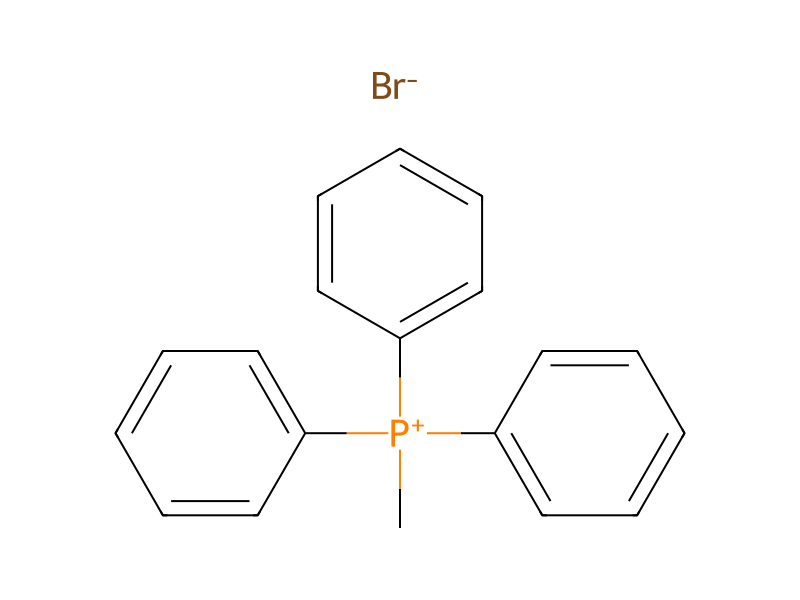
[CH2:1]([Li])CCC.[Br:6][C:7]1[CH:14]=[N:13][CH:12]=[CH:11][C:8]=1[CH:9]=O>[Br-].C[P+](C1C=CC=CC=1)(C1C=CC=CC=1)C1C=CC=CC=1.C1COCC1>[Br:6][C:7]1[CH:14]=[N:13][CH:12]=[CH:11][C:8]=1[CH:9]=[CH2:1]Participants
Reactant 2


Product 1

Reagents, catalysts & solvents 2

Conditions
- Temperature
- -78 °C
Procedure
To a solution of methyltriphenylphosphonium bromide (2.14 g, 6.00 mmol) in THF (27 mL) at −78° C. was added n-butyllithium (2.5 M in hexanes, 1.8 mL, 4.5 mmol). The resulting yellow reaction mixture was stirred for 30 min at −78° C. In a separate flask THF (6 ml) was added to 3-bromoisonicotinaldehyde (CAS#113118-81-3, 558 mg, 3.00 mmol). The resulting 3-bromoisonicotinaldehyde solution was the transferred, via cannula, to the phosphonium ylide mixture followed by a 2 mL THF wash. The reaction was allowed to warm to room temperature over 60 minutes and then permitted to stir for an additional 30 minutes. The reaction was then quenched with saturated aqueous sodium bicarbonate and diluted with ethyl acetate. The layers were separated and the organic layer was washed with saturated aqueous sodium bicarbonate. The organic layer was concentrated to near dryness. The resulting residue was then diluted with ethyl acetate and 1M sodium bisulfate and the layers were separated. The organic layer was extracted two additional times with 1M sodium bisulfate. The aqueous layers were combined, diluted with dichloromethane, and neutralized via the careful addition of saturated aqueous sodium bicarbonate and solid sodium carbonate. The layers were separated and the now basic aqueous layer was extracted three additional times with dichloromethane. The dichloromethane layers were combined, dried over anhydrous sodium sulfate, filtered and concentrated. The resulting residue was purified by silica gel flash chromatography (ethyl acetate-dichloromethane, 0 to 16%) to furnish 3-bromo-4-vinyl-pyridine; MS: (ES+) m/z 183.9 (M+H)+
Workup
- washwash
- temperatureto warm to room temperature over 60 minutes
- stirringto stir for an additional 30 minutes
- customThe reaction was then quenched with saturated aqueous sodium bicarbonate
- additiondiluted with ethyl acetate
- customThe layers were separated
- washthe organic layer was washed with saturated aqueous sodium bicarbonate
- concentrationThe organic layer was concentrated
- additionThe resulting residue was then diluted with ethyl acetate and 1M sodium bisulfate
- customthe layers were separated
- extractionThe organic layer was extracted two additional times with 1M sodium bisulfate
- additiondiluted with dichloromethane
- additionneutralized via the careful addition of saturated aqueous sodium bicarbonate and solid sodium carbonate
- customThe layers were separated
- extractionthe now basic aqueous layer was extracted three additional times with dichloromethane
- dry with materialdried over anhydrous sodium sulfate
- filtrationfiltered
- concentrationconcentrated
- customThe resulting residue was purified by silica gel flash chromatography (ethyl acetate-dichloromethane, 0 to 16%)
Sources & evidence
- ORD record
- ord-a1637d127a64443d9796f97d5164967e
- Source dataset
- uspto-grants-2014_07
- Patent number
- US08778972B2
Reaction notes
Loading…