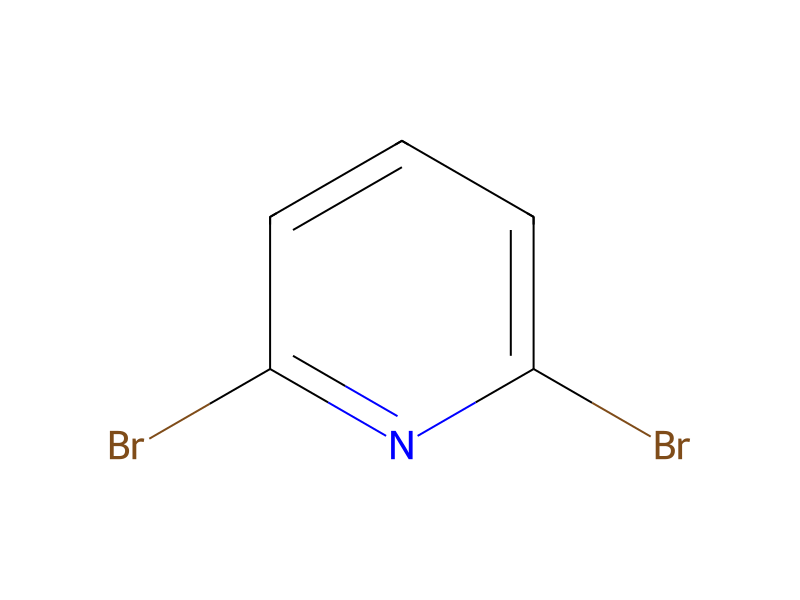
2,6-Dibromopyridine → HCID 11345640, compound
Reaction equation

Br[C:2]1[CH:7]=[CH:6][CH:5]=[C:4]([Br:8])[N:3]=1.[Br-].[CH2:10]([Zn+])[C:11]1[CH:16]=[CH:15][CH:14]=[CH:13][CH:12]=1>C1COCC1.C1C=CC([P]([Pd]([P](C2C=CC=CC=2)(C2C=CC=CC=2)C2C=CC=CC=2)([P](C2C=CC=CC=2)(C2C=CC=CC=2)C2C=CC=CC=2)[P](C2C=CC=CC=2)(C2C=CC=CC=2)C2C=CC=CC=2)(C2C=CC=CC=2)C2C=CC=CC=2)=CC=1>[CH2:10]([C:2]1[CH:7]=[CH:6][CH:5]=[C:4]([Br:8])[N:3]=1)[C:11]1[CH:16]=[CH:15][CH:14]=[CH:13][CH:12]=1Participants
5
Reactant 2

Product 1

Reagents, catalysts & solvents 2


Conditions
- Temperature
- 60 °C
Procedure
2,6-Dibromopyridine (2.36 g, 1 mmol), benzylzinc bromide (0.9 M in THF, 1.05 mL, 0.95 mmol) and tetrakis(triphenylphosphine)palladium(0) (0.012 g, 0.01 mmol) were placed in THF (75 mL) and heated to 60° C. for 20 hours. The reaction mixture was cooled, submitted to standard aqueous workup and purified on silica gel to afford the title compound.
Workup
- temperatureThe reaction mixture was cooled
- custompurified on silica gel
Sources & evidence
- ORD record
- ord-cab72727842c43b9b43e50499420e212
- Source dataset
- uspto-grants-2014_07
- Patent number
- US08778983B2
Reaction notes
Loading…