Crotonic Acid → HCID 86762530, compound
Reaction equation

[CH3:1][CH:2]([CH:8]([CH3:10])[CH3:9])[C:3](=[CH2:7])[CH:4]([OH:6])[CH3:5].[C:11](O)(=[O:15])/[CH:12]=[CH:13]/[CH3:14]>CC1C=CC(S(O)(=O)=O)=CC=1.C1(C)C=CC=CC=1>[CH3:5][CH:4]([O:6][C:11](=[O:15])[CH:12]=[CH:13][CH3:14])[C:3](=[CH2:7])[CH:2]([CH3:1])[CH:8]([CH3:10])[CH3:9]Participants
Reactant 2
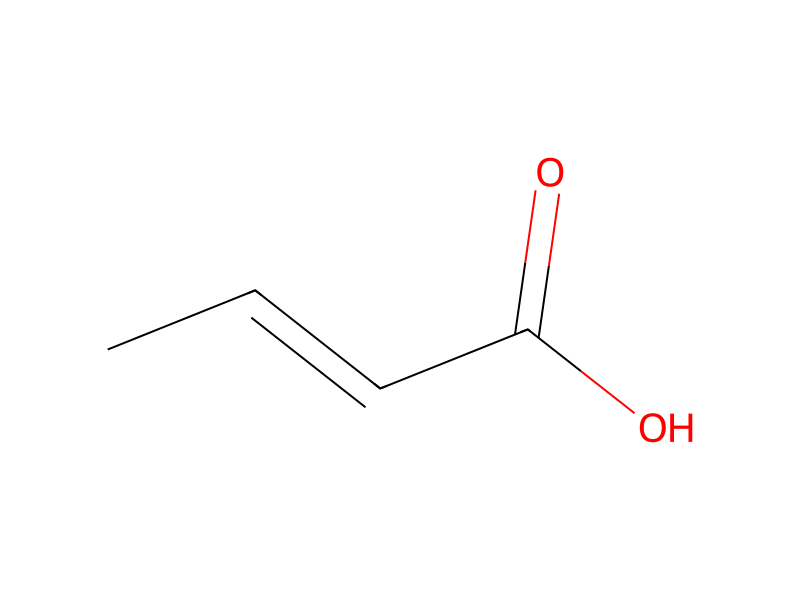

Product 1

Reagents, catalysts & solvents 2


Conditions
- Temperature
- 125 °C
Procedure
The obtained 4,5-dimethyl-3-methylene-hexan-2-ol (280 g), crotonic acid (188 g,), PTSA (2.5 g), and toluene (250 mL) were charged into a 2-L reaction flask fitted with a mechanical stirrer, a thermocouple, a Dean-Stark trap, and a condenser. The reaction mixture was heated to reflux at about 120-130° C. Water was removed azeotropically. The reaction was aged at reflux for about 4-5 hours until no more water evolved. The reaction was cooled to room temperature and quenched with water (400 mL). The organic layer was separated and subsequently washed with sodium carbonate (5%, 300 mL), and further fractional distilled to provide but-2-enoic acid 1,3,4-trimethyl-2-methylene-pentyl ester (290 g) with a boiling point of 114° C. at 11 mmHg.
Workup
- customfitted with a mechanical stirrer
- temperatureThe reaction mixture was heated
- customWater was removed azeotropically
- temperatureat reflux for about 4-5 hours until no more water
- temperatureThe reaction was cooled to room temperature
- customquenched with water (400 mL)
- customThe organic layer was separated
- washsubsequently washed with sodium carbonate (5%, 300 mL)
- distillationfurther fractional distilled
Sources & evidence
- ORD record
- ord-6c3743c528d040df87ba94d172314891
- Source dataset
- uspto-grants-2014_07
- Patent number
- US08785677B1
Reaction notes
Loading…