Methanol → (1R)-2-bromo-1-phenylethanol
Reaction equation

[Br:1][CH2:2][C:3]([C:5]1[CH:10]=[CH:9][CH:8]=[CH:7][CH:6]=1)=[O:4].CO>O1CCCC1>[Br:1][CH2:2][C@@H:3]([C:5]1[CH:10]=[CH:9][CH:8]=[CH:7][CH:6]=1)[OH:4]Participants
Reactant 2

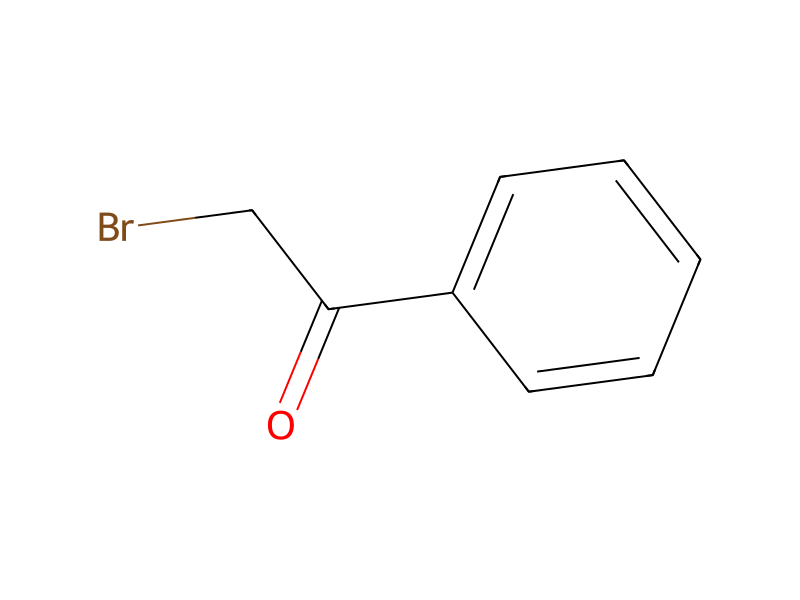
Product 1

Reagents, catalysts & solvents 1

Procedure
(R)-2-amino-2-cyclohexyl-1,1-diphenylethanol (59 mg, 0.2 mmol), dry tetrahydrofuran (2 mL) and trimethylboroxine (27.2 μL, 0.24 mmol) were added to a dry flask under an atmosphere of nitrogen, then stirred for 1.5 hr to form a solution of (R)-4-cyclohexyl-5,5-diphenyl-2-methoxy-1,3,2-oxazaborolidine. Borane dimethylsulfide complex (100 μL, 1.0 mmol) was added and the reaction stirred for 30 minutes. Then, a solution of bromoacetophenone (199 mg, 1.0 mmol) in dry tetrahydrofuran (4 mL) was added at the rate of 9 mL/hr by means of a syringe pump. After 1.5 hr, methanol was added to quench the reaction and then, the solvent was removed by evaporation. The resulting residue was chromatographed on silica gel (hexane/ethyl acetate 20:1) and combination of the like fractions, followed by removal of the solvent gave (R)-2-bromo-1-phenylethanol (130 mg, 98.7% ee). The enantiomeric excess was measured by HPLC (Chiralcel OD-H column, mobile phase, hexane/2-propanol 9:1, flow rate=0.7 mL/min).
Workup
- additionBorane dimethylsulfide complex (100 μL, 1.0 mmol) was added
- waitAfter 1.5 hr
- customto quench
- customthe reaction
- customthe solvent was removed by evaporation
- customThe resulting residue was chromatographed on silica gel (hexane/ethyl acetate 20:1) and combination of the like fractions
- customfollowed by removal of the solvent
Sources & evidence
- ORD record
- ord-2069b0fc8bf6470f94589f0d34aa5872
- Source dataset
- uspto-grants-2003_01
- Patent number
- US06509472B2
Reaction notes
Loading…