Methanol → (1S)-2-bromo-1-phenyl-ethanol
Reaction equation

[Br:1][CH2:2][C:3]([C:5]1[CH:10]=[CH:9][CH:8]=[CH:7][CH:6]=1)=[O:4].CO>O1CCCC1>[Br:1][CH2:2][C@H:3]([C:5]1[CH:10]=[CH:9][CH:8]=[CH:7][CH:6]=1)[OH:4]Participants
Reactant 2

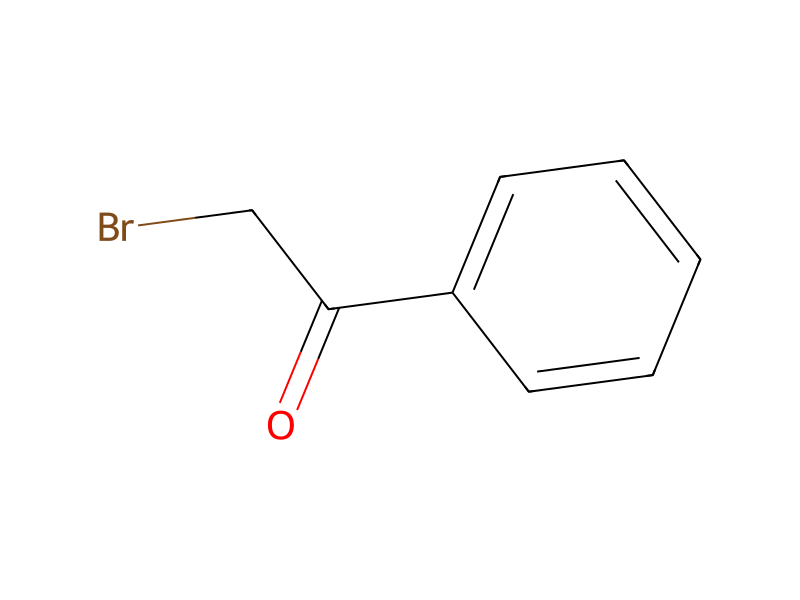
Product 1

Reagents, catalysts & solvents 1

Procedure
(S)-2-amino-2-cyclohexyl-1,1-bis-(4-methoxyphenyl)ethanol (71.2 mg, 0.2 mmol), dry tetrahydrofuran (2 mL) and borane dimethylsulfide complex (1 00 μL, 1.0 mmol) were added to a dry flask under at atmosphere of nitrogen. The mixture was stirred at room temperature for 1.5 hours to form (R)-4-cyclohexyl-5,5-bis-(4-methoxy)phenyl-1,3,2-oxazaborolidine. A solution of bromoacetophenone (199 mg, 1.0 mmol) in dry tetrahydrofuran (4 mL) was added to the borane/(R)-4-cyclohexyl-5,5-bis-(4-methoxy)phenyl-1,3,2-oxazaborolidine complex at the rate of 9 mL/hr by means of a syringe pump. The resulting mixture was stirred at room temperature for an additional 1.5 hours. Methanol was added to quench the reaction and then the solvent was removed by evaporation. The resulting residue was chromatographed on silica gel (hexane/ethyl acetate, 25:1) and combination of the like fractions followed by removal of the solvent gave (S)-2-bromo-1-phenylethanol (170 mg, 96.6% ee). The enantiomeric excess was measured by HPLC (Chiralcel OD-H column, mobile phase, hexane/2-propanol 9:1, flow rate=0.7 mL/min).
Workup
- customto quench
- customthe reaction
- customthe solvent was removed by evaporation
- customThe resulting residue was chromatographed on silica gel (hexane/ethyl acetate, 25:1) and combination of the like fractions
- customfollowed by removal of the solvent
Sources & evidence
- ORD record
- ord-9a88feb2506d4b4aba94a3164e081bd4
- Source dataset
- uspto-grants-2003_01
- Patent number
- US06509472B2
Reaction notes
Loading…