Toluene → 1,4-Benzenedicarbonitrile, 2-fluoro-
Reaction equation

Br[C:2]1[CH:9]=[CH:8][C:5]([C:6]#[N:7])=[C:4]([F:10])[CH:3]=1.C1(C)C=CC=CC=1.[Cl-].[NH4+].[CH3:20][N:21](C=O)C>[C-]#N.[Zn+2].[C-]#N.C1C=CC([P]([Pd]([P](C2C=CC=CC=2)(C2C=CC=CC=2)C2C=CC=CC=2)([P](C2C=CC=CC=2)(C2C=CC=CC=2)C2C=CC=CC=2)[P](C2C=CC=CC=2)(C2C=CC=CC=2)C2C=CC=CC=2)(C2C=CC=CC=2)C2C=CC=CC=2)=CC=1>[F:10][C:4]1[CH:3]=[C:2]([C:20]#[N:21])[CH:9]=[CH:8][C:5]=1[C:6]#[N:7]Participants
7





Procedure
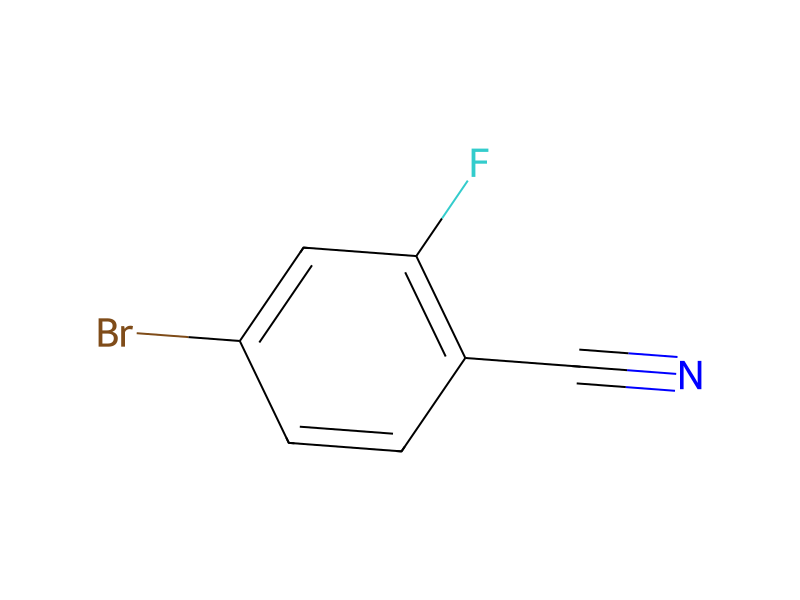
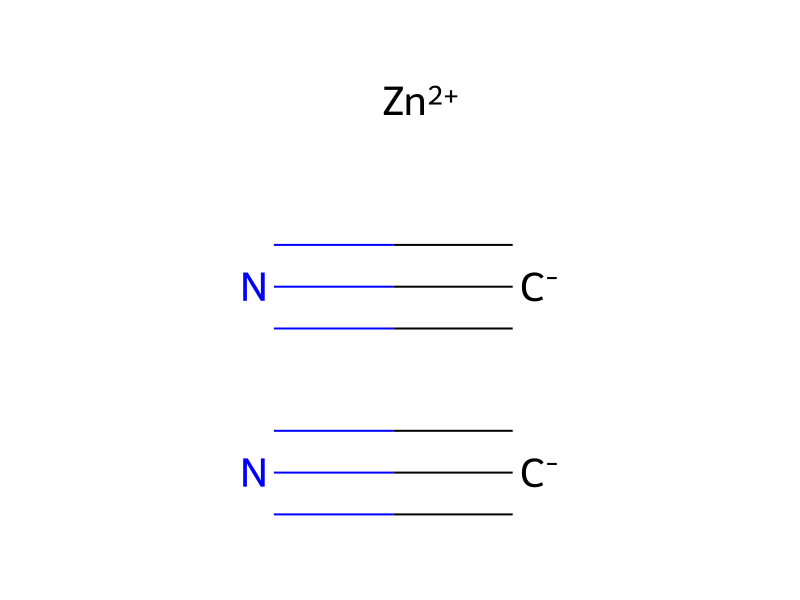
A solution of 4-bromo-2-fluorobenzonitrile (20 g, 100 mmol), zinc cyanide (7 g, 60 mmol) and tetrakis(triphenylphosphine)palladium (4.6 g, 4 mmol) in DMF (100 mL) was heated at 80° C. for 4 hr. Toluene (300 mL) and saturated aqueous ammonium chloride (300 mL) were added and the layers were separated. The organic layer was washed once with saturated aqueous ammonium chloride and twice with brine. The organic phase was dried (MgSO4), filtered and concentrated. The product was purified by silica gel chromatography, eluting with a gradient of hexanes to 30% EtOAc/hexanes (11 g, 75%).
Workup
- customthe layers were separated
- washThe organic layer was washed once with saturated aqueous ammonium chloride and twice with brine
- dry with materialThe organic phase was dried (MgSO4)
- filtrationfiltered
- concentrationconcentrated
- customThe product was purified by silica gel chromatography
- washeluting with a gradient of hexanes to 30% EtOAc/hexanes (11 g, 75%)
Sources & evidence
- ORD record
- ord-a1788ff386734f9a96cccc9140e86ea9
- Source dataset
- uspto-grants-2000_03
- Patent number
- US06034104
Reaction notes
Loading…