Sodium hydride → 1-(4-Chlorophenyl)-1-t-butyl-ethylene oxide
Reaction equation

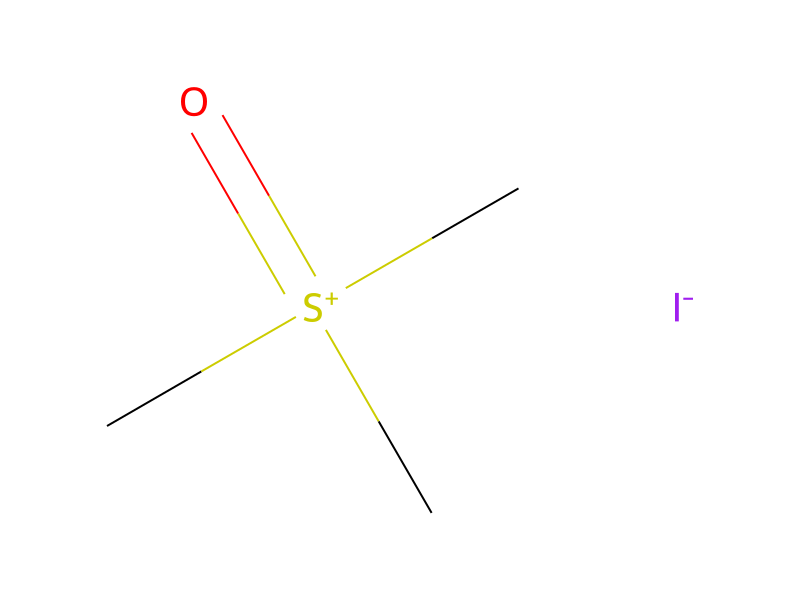
[H-].[Na+].[I-].[CH3:4][S+](C)(C)=O.[C:9]([C:13]([C:15]1[CH:20]=[CH:19][C:18]([Cl:21])=[CH:17][CH:16]=1)=[O:14])([CH3:12])([CH3:11])[CH3:10]>CS(C)=O>[Cl:21][C:18]1[CH:19]=[CH:20][C:15]([C:13]2([C:9]([CH3:12])([CH3:10])[CH3:11])[O:14][CH2:4]2)=[CH:16][CH:17]=1Participants
5




Conditions
- Temperature
- 50 °C
Procedure
A solution of dimethyl oxosulphonium methylide was prepared under nitrogen from sodium hydride (0.03 mol) and powdered trimethyl oxosulphonium iodide (0.03 mol) in dry dimethyl sulphoxide (40 ml). A solution of 4-chlorophenyl tertiary butyl ketone (0.025 mol) in dry dimethyl sulphoxide (10 ml) was added dropwise at room temperature and the solution heated at 50° C. for 2.5 hours. After cooling to room temperature the solution was extracted with ether (150 ml), washed with water and dried over anhydrous sodium sulphate. Removal of the solvent gave 1-(4-chlorophenyl)-1-t-butyl-ethylene oxide (95%) as a colourless liquid.
Workup
- temperatureAfter cooling to room temperature the solution
- extractionwas extracted with ether (150 ml)
- washwashed with water
- dry with materialdried over anhydrous sodium sulphate
- customRemoval of the solvent
Sources & evidence
- ORD record
- ord-e6f47e3038c742aa800f74aac403d0f2
- Source dataset
- uspto-grants-1989_11
- Patent number
- US04880457
Reaction notes
Loading…