Trifluoroacetic acid → 5-(2-Chloroethyl)Oxindole
Reaction equation

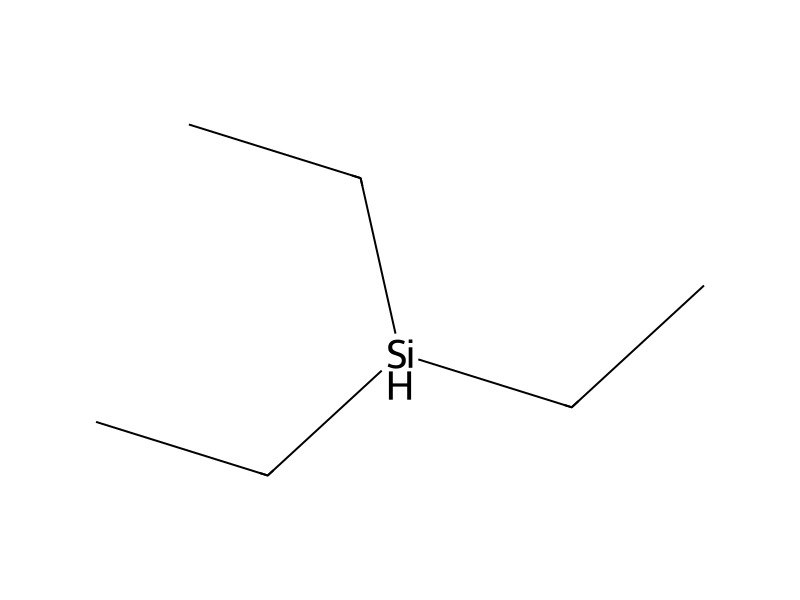
[Cl:1][CH2:2][C:3]([C:5]1[CH:6]=[C:7]2[C:11](=[CH:12][CH:13]=1)[NH:10][C:9](=[O:14])[CH2:8]2)=O.FC(F)(F)C(O)=O.C([SiH](CC)CC)C>>[Cl:1][CH2:2][CH2:3][C:5]1[CH:6]=[C:7]2[C:11](=[CH:12][CH:13]=1)[NH:10][C:9](=[O:14])[CH2:8]2Participants
4



Procedure
To a 100 ml round-bottomed flask equipped with condenser and N2 inlet were added 5.0 g (23.9 mmol) of 5-chloroacetyl oxindole and 18.5 ml trifluoroacetic acid. To the stirring solution was added 8.77 ml (54.9 mmol) of triethylsilane while cooling to prevent exotherm, and the reaction stirred 16 hours at room temperature. The reaction was then poured into ice water, stirred, and the beige solid filtered, washed with water and hexane, and dried to give 5-(2-chloroethyl)oxindole, m.p. 168°-170° C., 3.0 g (64%).
Workup
- customTo a 100 ml round-bottomed flask equipped with condenser and N2 inlet
- temperaturewhile cooling
- stirringstirred
- filtrationthe beige solid filtered
- washwashed with water and hexane
- customdried
Sources & evidence
- ORD record
- ord-ba7ab63fdc354dc3ac3bcd3562d7657a
- Source dataset
- uspto-grants-1989_11
- Patent number
- US04883795
Reaction notes
Loading…