Phosphoenolpyruvate → Succinic Acid
Reaction equation

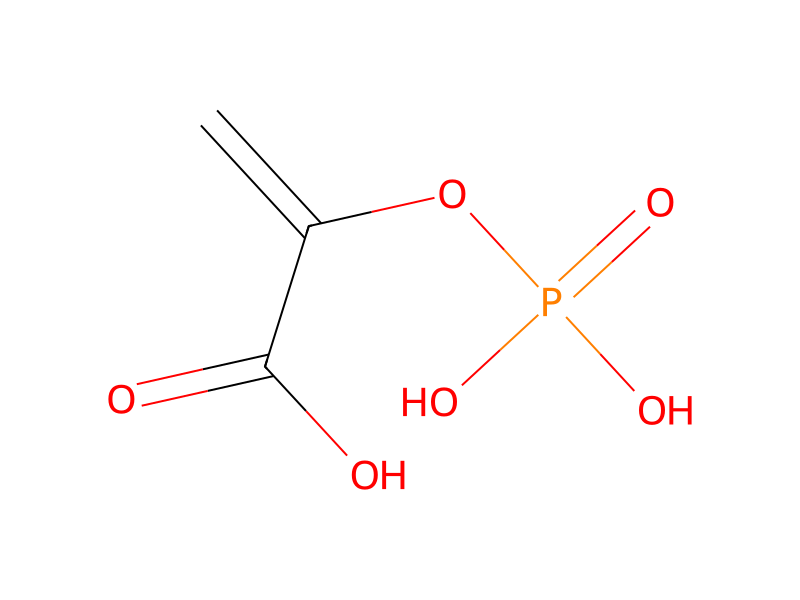
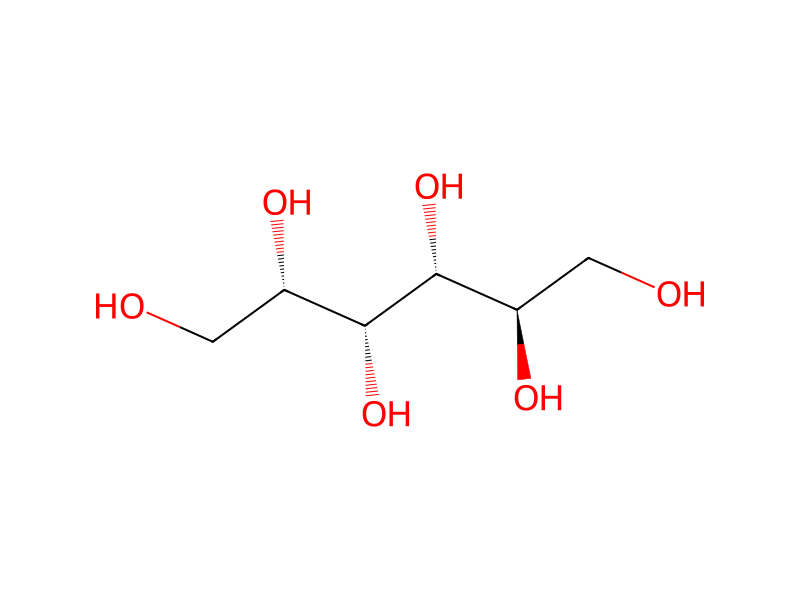
[C:1]([OH:8])(=[O:7])[CH2:2][CH2:3][C:4]([OH:6])=[O:5].C=C(OP(O)(O)=O)C(O)=O.C([O-])(=O)C(CC([O-])=O)O.C([O-])(=O)C=O.[O:33]=[CH:34][C@@H:35]([C@H:37]([C@@H:39]([C@@H:41]([CH2:43][OH:44])[OH:42])[OH:40])[OH:38])[OH:36]>>[OH:44][CH2:43][C@@H:41]([C@H:39]([C@@H:37]([C@@H:35]([CH2:34][OH:33])[OH:36])[OH:38])[OH:40])[OH:42].[C:1]([OH:8])(=[O:7])[CH2:2][CH2:3][C:4]([OH:6])=[O:5]Participants




Procedure
Metabolic flux analysis was used to evaluate the effect of different carbon sources on succinic acid production in batch fermentations with A. succinogenes FZ45. The analyses established that the major pathway for succinic acid production in A. succinogenes FZ45 flows in the following manner: phosphoenolpyruvate (PEP)→oxaloacetate (OAA)→malate→fumarate→succinic acid. The glyoxylate shunt and the PEP-transport-system (PTS) appear not to be substantially used in the organism. Glucose fermentations reach a concentration of 61.7 g/L succinic acid with a yield of about 94% (succinic acid (g)/glucose (g)). Fermentations performed using a more reduced carbon source, such as sorbitol, produced higher amounts of succinic acid (77.3 g/L) with a higher yield (108% succinic acid (g)/glucose (g)), indicating that reducing power may become a limiting factor during the fermentation of glucose.
Sources & evidence
- ORD record
- ord-ad431c0de55341bfbdc87511305a3a33
- Source dataset
- uspto-grants-2012_02
- Patent number
- US08119377B2
Reaction notes
Loading…