Hydrochloric Acid → HCID 66755784, compound
Reaction equation

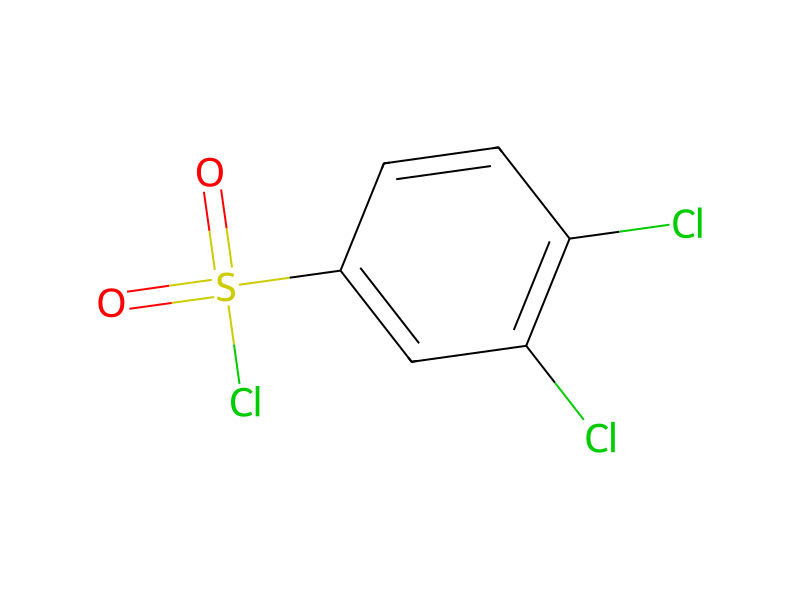
[Cl:1][C:2]1[CH:3]=[C:4]([S:9](Cl)(=[O:11])=[O:10])[CH:5]=[CH:6][C:7]=1[Cl:8].Cl.[CH3:14][O:15][C:16](=[O:24])[CH2:17][CH:18]1[CH2:23][CH2:22][CH2:21][CH2:20][NH:19]1.C(N(CC)CC)C.Cl>C(Cl)Cl>[Cl:1][C:2]1[CH:3]=[C:4]([S:9]([N:19]2[CH2:20][CH2:21][CH2:22][CH2:23][CH:18]2[CH2:17][C:16]([O:15][CH3:14])=[O:24])(=[O:11])=[O:10])[CH:5]=[CH:6][C:7]=1[Cl:8]Participants
6





Procedure
A solution of 3,4-dichlorobenzenesulfonyl chloride (1.88 g, 7.65 mmol) in DCM (15 ml) was added at 0° C. to a solution, cooled to 0° C., of piperidin-2-ylacetic acid methyl ester hydrochloride (1.3 g, 8.4 mmol) in DCM (33 ml) and triethylamine (2.66 ml, 21 mmol), and stirring was then carried out for 90 minutes at room temperature. 0.5 M HCl (20 ml) was then added, and stirring was carried out for a further 15 minutes. The organic phase was separated off, washed with water and dried over sodium sulfate. The solvent was removed using a rotary evaporator and the product was used in the next stage without being purified further. Yield: 1.9 g (63%)
Workup
- stirringstirring
- waitwas carried out for a further 15 minutes
- customThe organic phase was separated off
- washwashed with water
- dry with materialdried over sodium sulfate
- customThe solvent was removed
- customa rotary evaporator
- customwithout being purified further
Sources & evidence
- ORD record
- ord-623a01e4931f4c1984e51264e9a356a6
- Source dataset
- uspto-grants-2012_02
- Patent number
- US08119633B2
Reaction notes
Loading…