Bromoacetyl bromide → 3-Oxo-3,4-dihydro-2H-benzo[b][1,4]oxazine-6-carbonitrile
Reaction equation

[NH2:1][C:2]1[CH:3]=[C:4]([CH:7]=[CH:8][C:9]=1[OH:10])[C:5]#[N:6].C(=O)(O)[O-].[Na+].Br[CH2:17][C:18](Br)=[O:19]>C(Cl)(Cl)Cl>[O:19]=[C:18]1[NH:1][C:2]2[CH:3]=[C:4]([C:5]#[N:6])[CH:7]=[CH:8][C:9]=2[O:10][CH2:17]1Participants
5
Reactant 3
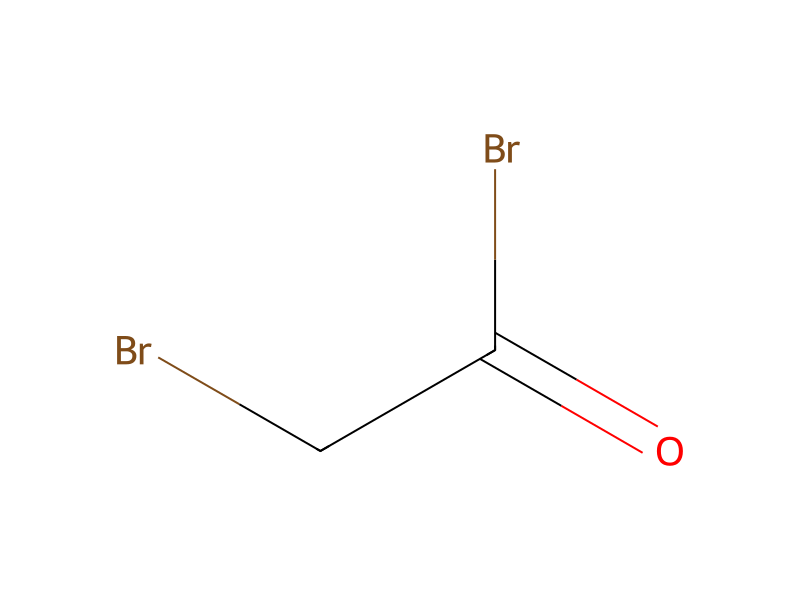


Product 1

Reagents, catalysts & solvents 1

Conditions
- Temperature
- 0 °C
Procedure
The title compound was prepared similarly to literature procedure (Caliendo, G; et. al.; Bioorg. Med. Chem. Lett., 2002, 10, 2663), but in one step. Commercially available 3-amino-4-hydroxybenzonitrile (2.5 g, 18.6 mmol) was dissolved in chloroform (300 mL) and saturated sodium bicarbonate (90 mL). The biphasic reaction mixture was cooled to 0° C. and bromoacetyl bromide (2.4 mL, 28 mmol) was added dropwise. The reaction was stirred overnight at room temperature. The layers were separated and the aqueous layer was filtered to yield the desired product as a tan solid, 2.3 g (69%).
Workup
- customThe title compound was prepared similarly to literature procedure (Caliendo, G; et. al.; Bioorg. Med. Chem. Lett., 2002, 10, 2663)
- customThe biphasic reaction mixture
- customThe layers were separated
- filtrationthe aqueous layer was filtered
Sources & evidence
- ORD record
- ord-df9b4e274a4846b8816022368982a983
- Source dataset
- uspto-grants-2012_02
- Patent number
- US08124602B2
Reaction notes
Loading…