Hydrochloric Acid → 4-(Benzylsulfanyl)benzaldehyde
Reaction equation

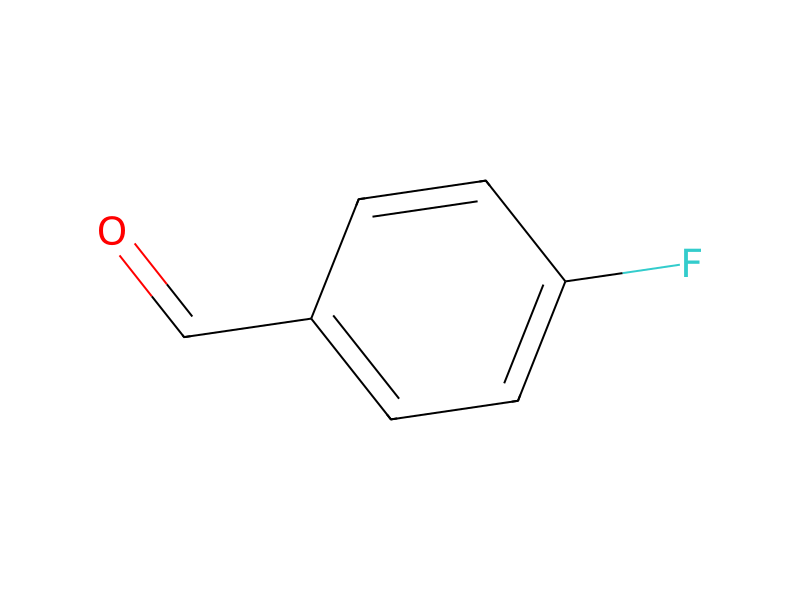
C(=O)([O-])[O-].[Cs+].[Cs+].[CH2:7]([SH:14])[C:8]1[CH:13]=[CH:12][CH:11]=[CH:10][CH:9]=1.F[C:16]1[CH:23]=[CH:22][C:19]([CH:20]=[O:21])=[CH:18][CH:17]=1.Cl>O.CN(C=O)C>[CH2:7]([S:14][C:16]1[CH:23]=[CH:22][C:19]([CH:20]=[O:21])=[CH:18][CH:17]=1)[C:8]1[CH:13]=[CH:12][CH:11]=[CH:10][CH:9]=1Participants






Conditions
- Temperature
- 40 °C
Procedure
To a stirred mixture of cesium carbonate (12.81 g, 39.33 mmol), benzyl mercaptan (4.7 mL, 39 mmol), and N,N,-dimethylformamide (80 mL) was added 4-fluorobenzaldehyde, slowly over several minutes. The reaction mixture was stirred at 40° C. overnight. The reaction mixture was cooled to room temperature, then diluted with water (500 mL). The resulting mixture was acidified to pH 4 using 1 N aqueous HCl, then extracted with ethyl acetate (3×150 mL). The combined organic layers were washed with water and brine, dried over MgSO4, filtered, and concentrated. A solution of the crude product and dichloromethane was concentrated over silica gel, and the resulting silica gel supported crude product was loaded onto an Analogix SuperFlash™ column. Flash chromatography (100% hexanes -15% ethyl acetate in hexanes) afforded 7.70 g (90%) of 4-(benzylsulfanyl)-benzaldehyde as a slightly pink solid.
Workup
- waitslowly over several minutes
- temperatureThe reaction mixture was cooled to room temperature
- extractionextracted with ethyl acetate (3×150 mL)
- washThe combined organic layers were washed with water and brine
- dry with materialdried over MgSO4
- filtrationfiltered
- concentrationconcentrated
- concentrationA solution of the crude product and dichloromethane was concentrated over silica gel
Sources & evidence
- ORD record
- ord-2186377eb5b0417fb59f3382efc8300c
- Source dataset
- uspto-grants-2012_02
- Patent number
- US08124629B2
Reaction notes
Loading…