Propargyl bromide → HCID 13236341, compound
Reaction equation

[N:1]1([C:7]2[CH:16]=[CH:15][CH:14]=[C:13]3[C:8]=2[CH2:9][CH2:10][C:11](=[O:17])[NH:12]3)[CH2:6][CH2:5][NH:4][CH2:3][CH2:2]1.C(=O)([O-])[O-].[Na+].[Na+].[CH2:24](Br)[C:25]#[CH:26]>CN(C=O)C>[CH2:26]([N:4]1[CH2:5][CH2:6][N:1]([C:7]2[CH:16]=[CH:15][CH:14]=[C:13]3[C:8]=2[CH2:9][CH2:10][C:11](=[O:17])[NH:12]3)[CH2:2][CH2:3]1)[C:25]#[CH:24]Participants
5
Reactant 3
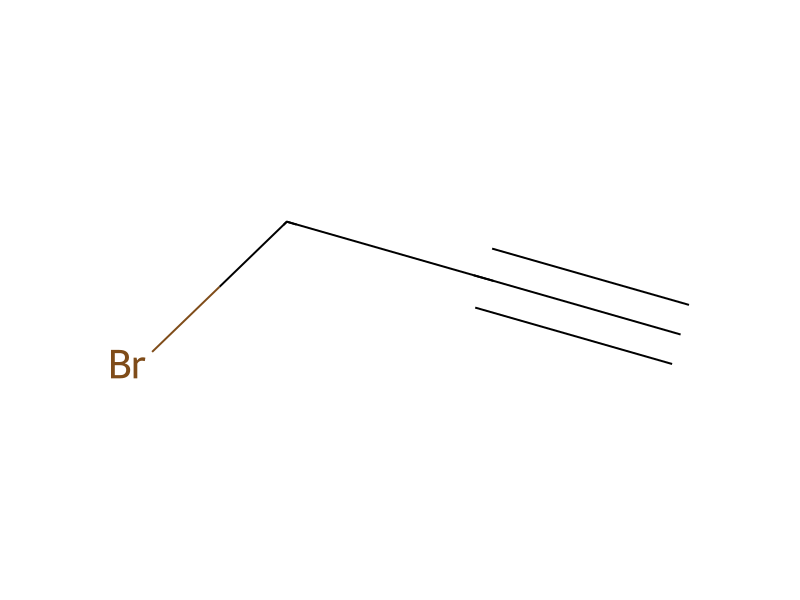


Product 1

Reagents, catalysts & solvents 1

Conditions
- Temperature
- 80 °C
Procedure
To a mixture of 1 g of 5-(1-piperazinyl)-3,4-dihydrocarbostyril, 30 ml of DMF and 900 mg of sodium carbonate was added 491 mg of propargyl bromide and the mixture was stirred at 80° C. for 3 hours. The reaction mixture was poured into a large amount of saturated saline solution and extracted with chloroform. After washing with water, the extract was dried over anhydrous sodium sulfate. Then, chloroform was distilled off and the residue was purified through silica gel column chromatography and recrystallized from chloroform to give 0.1 g of 5-[4-(2-propynyl)-1-piperazinyl]-3,4-dihydrocarbostyril, m.p. 225°-226° C., pale yellow powders.
Workup
- additionThe reaction mixture was poured into a large amount of saturated saline solution
- extractionextracted with chloroform
- washAfter washing with water
- dry with materialthe extract was dried over anhydrous sodium sulfate
- distillationThen, chloroform was distilled off
- customthe residue was purified through silica gel column chromatography
- customrecrystallized from chloroform
Sources & evidence
- ORD record
- ord-3e04f80dee2247808bc96698dbecf7a7
- Source dataset
- uspto-grants-1983_11
- Patent number
- US04415572
Reaction notes
Loading…