Ethylbenzene → Benzenepropanol
Reaction equation

[Sn].[CH2:2]=[CH:3][C:4]1[CH:9]=[CH:8][CH:7]=[CH:6][CH:5]=1.[C]=O.[H][H].C(C1C=CC=CC=1)C.C1(C(C)[CH2:29][OH:30])C=CC=CC=1>C1(=O)OC(C)CO1.C1C=CC=CC=1>[C:4]1([CH2:3][CH2:2][CH2:29][OH:30])[CH:9]=[CH:8][CH:7]=[CH:6][CH:5]=1Participants


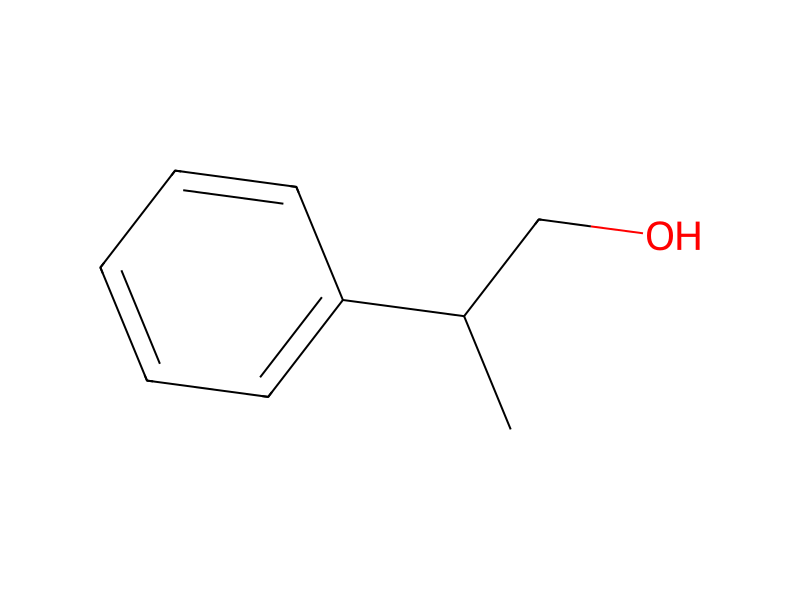





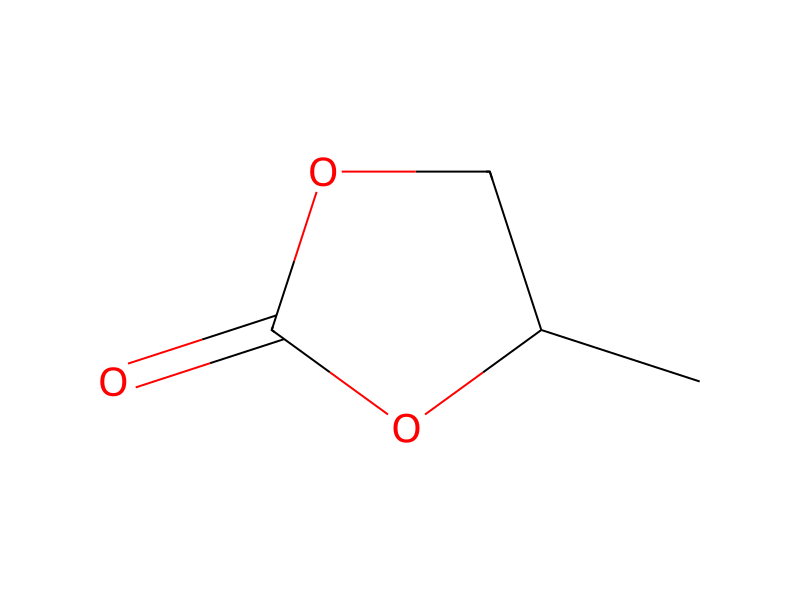
Conditions
- Temperature
- 90 °C
Procedure
Tin methylate Sn(OCH3)2 is produced according to the method disclosed by J. Morrison and H. Haendler, 29 J. Inorg. Nucl. Chem., 393-400 (1967). A catalytic system comprising 66.4 mg of LPtCl2 (L being the same ligand as in example 12) and 15.7 mg tin methylate in a solvent consisting of a mixture of 15 cm3 benzene and 10 cm3 propylene carbonate is introduced under nitrogen into a 100 cm3 stainless steel autoclave reactor equipped with a bar magnet stirring system. Then, 1.23 g styrene is added. The reactor is heated to a temperature of 90° C. and then filled with an equimolar mixture of carbon monoxide and hydrogen (synthesis gas). The resulting mixture is stirred and the reaction continued at 90° C. under a pressure of 100 bars for a time (T) expressed in hours. A mixture of ethylbenzene, 2-phenylpropanol and 3-phenylpropanol is obtained with a degree of conversion (DC). The proportion by weight of ethylbenzene (EB) and the molar ratio (n/b) are determined as above. The results are reported in Table V below.
Workup
- additionis introduced under nitrogen into a 100 cm3 stainless steel autoclave reactor
- customequipped with a bar magnet
- stirringThe resulting mixture is stirred
- waitexpressed in hours
Sources & evidence
- ORD record
- ord-8535f1fc5187404783d2713abbb2405a
- Source dataset
- uspto-grants-1990_05
- Patent number
- US04923840
Reaction notes
Loading…