1-Piperidinecarboxaldehyde → HCID 178444530, compound
Reaction equation

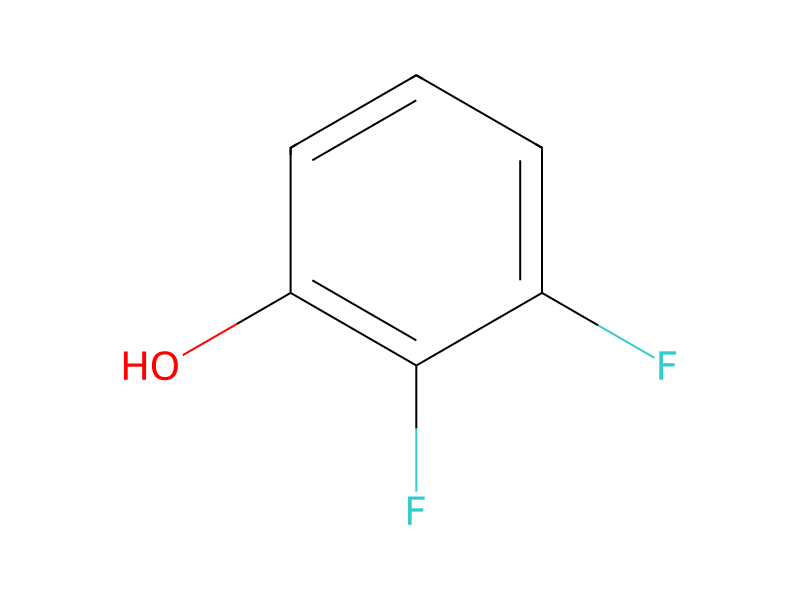
[F:1][C:2]1[C:7]([F:8])=[CH:6][CH:5]=[CH:4][C:3]=1[OH:9].[CH2:10]([C@H:15]1[CH2:20][CH2:19][C@H:18]([CH2:21]I)[CH2:17][CH2:16]1)[CH2:11][CH2:12][CH2:13][CH3:14].C([Li])CCC.[CH:28]([N:30]1CCCCC1)=O.NOS(O)(=O)=O>O1CCCC1.CN(C)CCN(C)C>[CH2:10]([C@H:15]1[CH2:20][CH2:19][C@H:18]([CH2:21][O:9][C:3]2[CH:4]=[CH:5][C:6]([C:28]#[N:30])=[C:7]([F:8])[C:2]=2[F:1])[CH2:17][CH2:16]1)[CH2:11][CH2:12][CH2:13][CH3:14]Participants
7





Procedure
0.1 mole of 1-(trans-4pentylcyclohexyl-1-methoxy)-2,3-difluorobenzene (prepared from 2,3-difluorophenol and trans-4-pentylcyclohexylmethyl iodide analogously to Example 4) is deprotonated by means of n-butyllithium in tetrahydrofuran/tetramethylethylenediamine and is formylated by means of N-formylpiperidine. The formyl compound is reacted as in Example 1b) with hydroxylamine-O-sulfonic acid. Working up in the customary manner gives 4-(trans-4-pentylcyclohexylmethoxy)-2,3-difluorobenzonitrile.
Sources & evidence
- ORD record
- ord-3e4208f7d13846d1ad9ce7d696e4a73a
- Source dataset
- uspto-grants-1990_05
- Patent number
- US04925590
Reaction notes
Loading…