Carbamic acid, ethyl ester → Toluene 2,4-Diisocyanate
Reaktionsgleichung

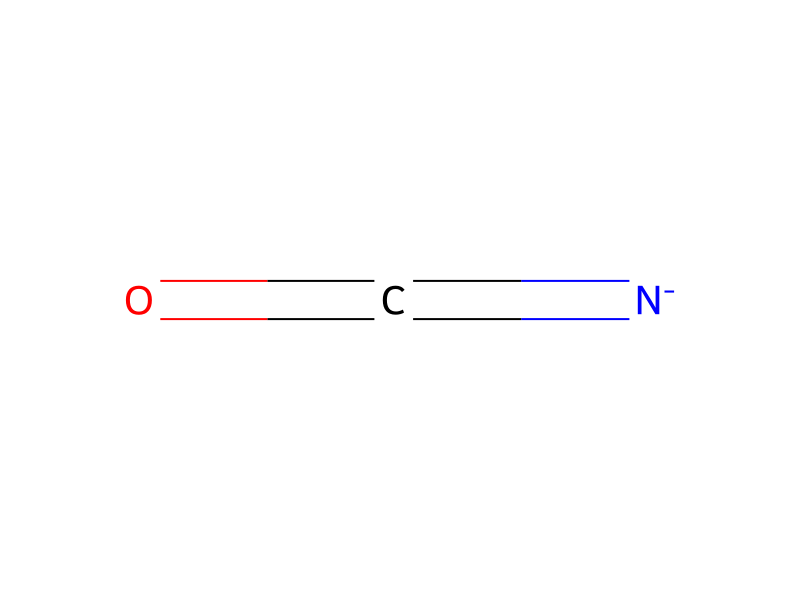
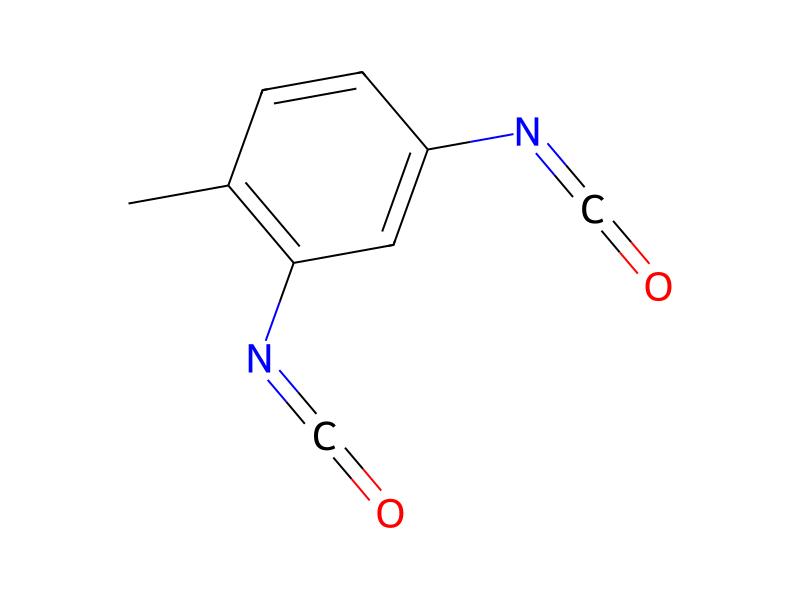
[N-]=C=O.NC(OCC)=O.[C:10]1([CH3:28])[C:11]([NH:22][C:23](OCC)=[O:24])=[CH:12][C:13]([NH:16][C:17](OCC)=[O:18])=[CH:14][CH:15]=1>>[CH3:28][C:10]1[CH:15]=[CH:14][C:13]([N:16]=[C:17]=[O:18])=[CH:12][C:11]=1[N:22]=[C:23]=[O:24]Komponenten


Versuchsvorschrift
A more recent British Pat. No. 1,247,451 (1971) discloses that it was known that organic isocyanates can be produced by the non-catalytic pyrolysis of urethanes at temperatures above 250° C. but the yield is undesirably low, and if lower temperatures are employed the isocyanate and alcohol will react to reform the original urethane. This confirms the findings discussed hereinbefore wherein various expedients such as catalysts and low pressures were employed with specific carbamates. The aforementioned British patent proposes to pyrolyze diethyl toluene-2,4-dicarbamate in the presence of a Lewis acid such as ferric chloride catalyst to produce toluene-2,4-diisocyanate (TDI). A yield of approximately 59 mole percent is shown. In general, the reaction is carried out at from 400° C. to 600° C. in the presence of the catalyst at subatmospheric pressures to form vapors, and condensing the vapors to recover the organic isocyanate product.
Aufarbeitung
- customwill react
Quellen und Nachweise
- ORD-Eintrag
- ord-d3a13ed5c3114cc99006b2d7a3d0db65
- Quelldatensatz
- uspto-grants-1976_06
- Patentnummer
- US03962302
Notizen zur Reaktion
Wird geladen…