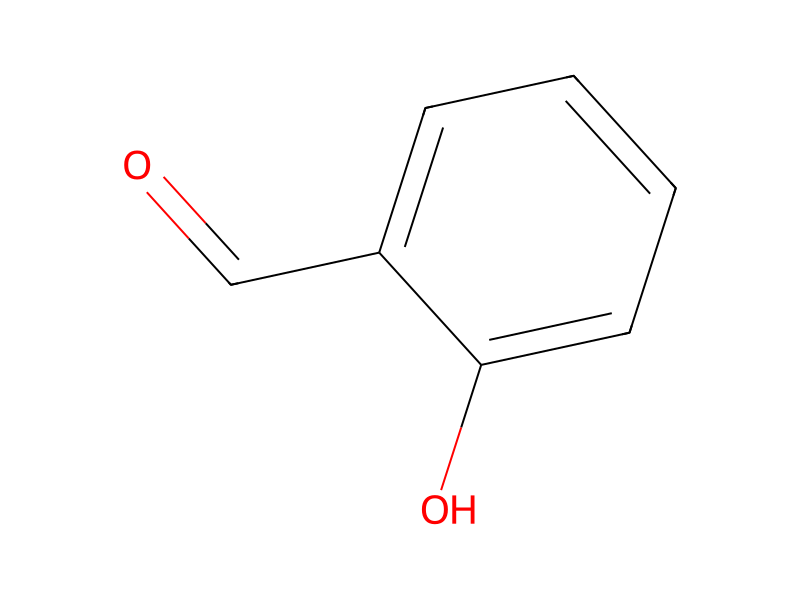
Salicylaldehyde → HCID 21529337, compound
Reaction equation

Br[CH2:2][C:3]([C:5]1[CH:6]=[C:7]([CH:11]([CH3:17])[C:12]([O:14][CH2:15][CH3:16])=[O:13])[CH:8]=[CH:9][CH:10]=1)=[O:4].C(=O)([O-])[O-].[K+].[K+].[CH:24]1[CH:29]=[C:28]([CH:30]=O)[C:27]([OH:32])=[CH:26][CH:25]=1>C(O)C>[O:32]1[C:27]2[CH:26]=[CH:25][CH:24]=[CH:29][C:28]=2[CH:30]=[C:2]1[C:3]([C:5]1[CH:6]=[C:7]([CH:11]([CH3:17])[C:12]([O:14][CH2:15][CH3:16])=[O:13])[CH:8]=[CH:9][CH:10]=1)=[O:4]Participants
5
Reactant 3


Product 1

Reagents, catalysts & solvents 1

Procedure
Ethyl 2-[meta-(α-bromo-acetyl)-phenyl]propionate (0.1 mole) is mixed with dry potassium carbonate (0.2 mole), salicylic aldehyde (0.1 mole) and ethanol (200 cc). The mixture is refluxed for 5 hours, with vigorous stirring. The initially yellow reaction medium turns brown during the heating step. The reaction mixture is then allowed to cool and the resulting precipitate is suction filtered. The alcohol is removed in vacuo. The resulting material is taken up into ethyl acetate, after which it is washed to neutral pH, dried and evaporated. The distilled residue gives a thick oil, b.p.0.05 = 210°-220°C. A second distillation gives the pure product (Yield: 25%).
Workup
- temperatureThe mixture is refluxed for 5 hours, with vigorous stirring
- temperatureto cool
- filtrationfiltered
- customThe alcohol is removed in vacuo
- washafter which it is washed to neutral pH
- customdried
- customevaporated
- customThe distilled residue gives a thick oil, b.p.0.05 = 210°-220°C
- distillationA second distillation
Sources & evidence
- ORD record
- ord-bcf48d2e70ce4a20b1933bb4d29115d1
- Source dataset
- uspto-grants-1976_06
- Patent number
- US03963758
Reaction notes
Loading…