Hydrochloric Acid → 1,2-Pyrrolidinedicarboxylic acid, 1-(1,1-dimethylethyl) ester, (2S)-
Reaction equation

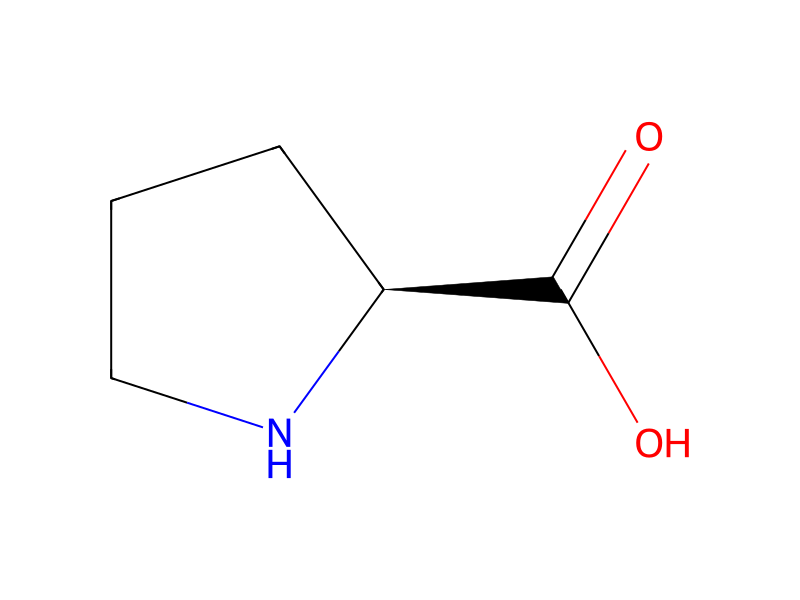
[NH:1]1[CH2:8][CH2:7][CH2:6][C@H:2]1[C:3]([OH:5])=[O:4].[Li].OC1C=CC=CN=1.[C:17](=O)([O-:34])[O:18][C:19]1([C:30](C)(C)C)[C:24](Cl)=C(Cl)C(Cl)=C(Cl)[CH:20]1Cl.Cl>[OH-].[Na+].O.C(Cl)(Cl)Cl.CN(C)C=O>[C:19]([O:18][C:17]([N:1]1[CH2:8][CH2:7][CH2:6][C@H:2]1[C:3]([OH:5])=[O:4])=[O:34])([CH3:30])([CH3:24])[CH3:20]Participants
10
Reactant 5



Product 1

Reagents, catalysts & solvents 4




Procedure
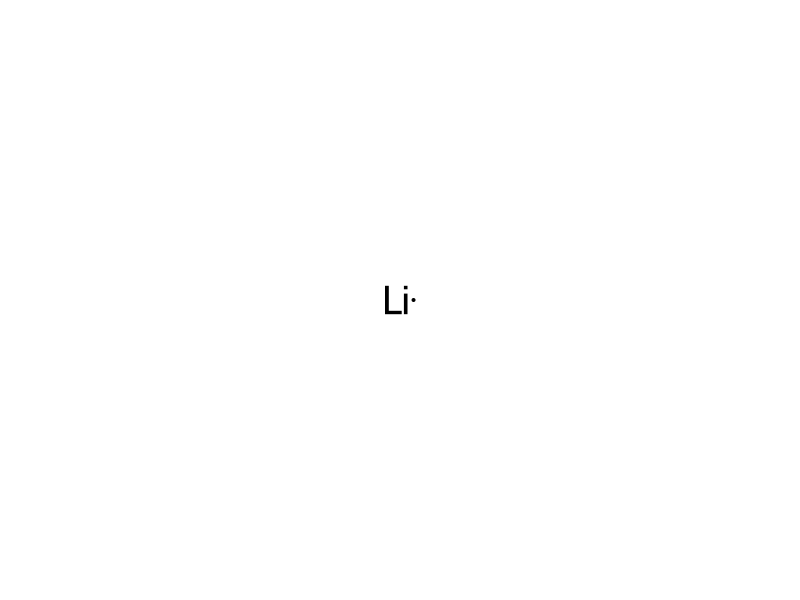
11.5 g. of L-proline is dissolved in 4N sodium hydroxide, and 100 ml. of dimethyl formamide, 50 ml. of chloroform, 10.1 g. of the lithium salt of 2-hydroxypyridine and 36.6 g. of t-butylpentachlorophenyl carbonate are added thereto. The solution is stirred at room temperature for 3 hours, after which 100 ml. of chloroform and 200 ml. of water are added. After shaking, the water layer is acidified to a pH of 2 with 1N hydrochloric acid, and extracted with 200 ml. of ethyl acetate. The product is worked up as previously described to give t-butyloxycarbonyl-L-proline in 79% yield, m.p. 137°C.
Workup
- stirringAfter shaking
- extractionextracted with 200 ml
Sources & evidence
- ORD record
- ord-78c19e70c0664da9b9771d4a0a57e5c8
- Source dataset
- uspto-grants-1976_06
- Patent number
- US03963728
Reaction notes
Loading…