1-Adamantanecarboxylic acid → Adamantane
Reaction equation

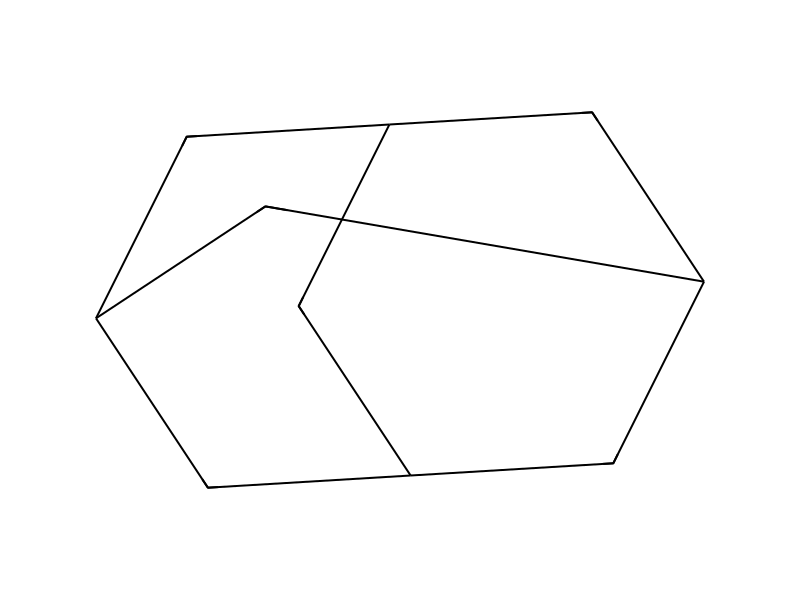
[C:1]12(C(O)=O)[CH2:10][CH:5]3[CH2:6][CH:7]([CH2:9][CH:3]([CH2:4]3)[CH2:2]1)[CH2:8]2>C(#N)C>[CH:1]12[CH2:10][CH:5]3[CH2:6][CH:7]([CH2:9][CH:3]([CH2:4]3)[CH2:2]1)[CH2:8]2Participants
Reactant 1

Product 1
Reagents, catalysts & solvents 1

Procedure
as shown in the mass spectrum of the reaction gases. In aqueous solutions the rates of decarboxylation were similar for the acids investigated. Adamantane-1-carboxylic acid, dissolved in ACN at a much lower concentration (~0.12 M), was found to decarboxylate at a significantly lower rate than the other acids with a decrease in rate as the photolysis proceeded (initial rate, 65 μmol/h; final rate, after 62% conversion, 28 μmol/h). However, the corresponding alkane, adamantane, was again formed in 58% yield by decarboxylation of this bridgehead carboxylic acid. A noise decoupled C NMR spectrum showed only two nonequivalent carbon atoms, yielding definite proof of the product, owing to its high symmetry. The usual electrochemical Kolbe reaction for these acids produces predominantly dimer with smaller amounts of the alkene. For the adamantane-1-carboxylic acid the Kolbe reaction, carried out in an alcoholic medium at a metal electrode, produces 1-alkoxyadamantane.
Workup
- customas shown in the mass spectrum of the reaction gases
Sources & evidence
- ORD record
- ord-d2bca474c6484435b3aa342d235bcaff
- Source dataset
- uspto-grants-1981_12
- Patent number
- US04303486
Reaction notes
Loading…