Potassium Phosphate, Tribasic → HCID 9820147, compound
Reaction equation

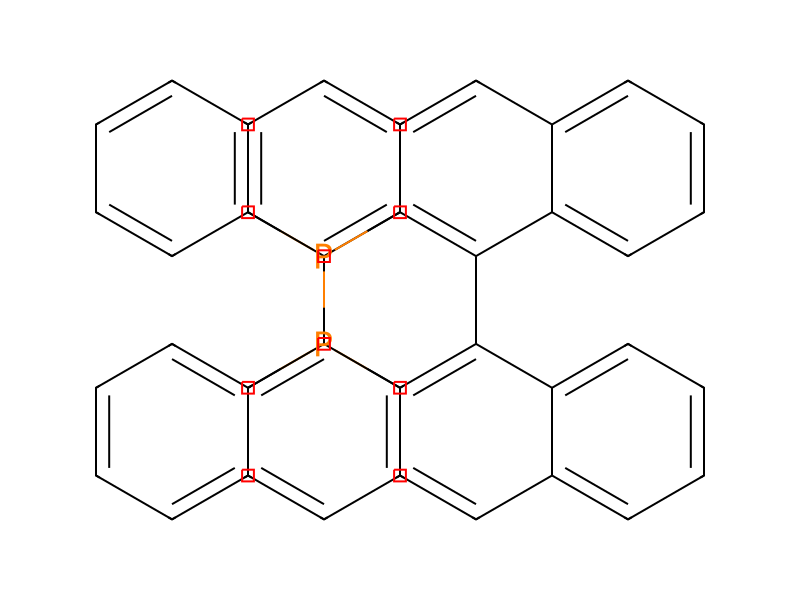
C1C=CC(P(C2C(C3C(P(C4C=CC=CC=4)C4C=CC=CC=4)=CC=C4C=3C=CC=C4)=C3C(C=CC=C3)=CC=2)C2C=CC=CC=2)=CC=1.[CH3:47][O:48][C:49](=[O:64])[C:50]1[CH:55]=[CH:54][C:53](Cl)=[N:52][C:51]=1[C:57]1[CH:62]=[CH:61][C:60]([F:63])=[CH:59][CH:58]=1.C([NH:72][C:73]1[C:78]([F:79])=[CH:77][CH:76]=[CH:75][C:74]=1[F:80])(OC(C)(C)C)=O.[O-]P([O-])([O-])=O.[K+].[K+].[K+].Cl.CCOCC>C1(C)C=CC=CC=1.C([O-])(=O)C.[Pd+2].C([O-])(=O)C.CCOC(C)=O>[CH3:47][O:48][C:49](=[O:64])[C:50]1[CH:55]=[CH:54][C:53]([NH:72][C:73]2[C:78]([F:79])=[CH:77][CH:76]=[CH:75][C:74]=2[F:80])=[N:52][C:51]=1[C:57]1[CH:62]=[CH:61][C:60]([F:63])=[CH:59][CH:58]=1Participants
Reactant 5



Product 1

Reagents, catalysts & solvents 3



Conditions
- Temperature
- 50 °C
Procedure
To a nitrogen purged flask was charged palladium acetate (13.2 g, 59 mmoles, 0.04 eq), racemic BINAP (36.6 g, 59 mmoles, 0.04 eq), followed by 1.9 L toluene. The heterogeneous slurry was heated to 50° C. under nitrogen for 2 hours, cooled to 30° C., then the pyridyl chloride 41 (386.4 g, 1.45 moles, 1.0 eq) and Boc-2,6-difluoroaniline 42 (386.4 g, 1.69 moles, 1.2 eq), and K3PO4 (872 g, 4.1 moles, 2.8 eq) were added all at once followed by a 1.9 L toluene rinse. The heterogeneous reaction mixture was heated to 100° C. overnight and monitored by HPLC. When the reaction showed complete conversion to 43 by HPLC [Tret 41=17 min, Tret 43=20.5 min, Tret 44=17.6 min, monitored at 229 nm] (usually between 18-20 hours) the reaction was cooled to room temperature and the contents diluted with 1.94 L EtOAc. To this was added 1×1.94 L of 6N HCl, and both layers were filtered through celite. The celite wet cake was rinsed with 2×1.9 L EtOAc. The layers were separated and the organic layer washed with 1×1.9 L of brine, dried (MgSO4), filtered and concentrated to a brown, viscous oil. To remove the Boc-protecting group, the oil was dissolved in 1.94 L of methylene chloride and 388 mL TFA was added. The reaction was stirred overnight to facilitate Boc removal. The volatiles were removed in vacuo, EtOAc (1.9 L) and sufficient quantity of 1 or 6 N NaOH was added until the pH was 2-7. Then a sufficient quantity of 5% NaHCO3 was added to bring the pH to 8-9. The organic layer was separated and washed with 1×5% NaHCO3, dried (MgSO4), filtered an concentrated to a brown oil/liquid. The crude oil/liquid was azeodried twice with a sufficient quantity of toluene. At times the free base precipitated out resulting in a slurry. The residue was dissolved in 500 mL toluene and 1.6 L 1N HCl/ether solution was added, which resulted in the solids crashing out. Heat was applied until the homogenized/solids broke up. If necessary, 200 mL of EtOAc can be added to facilitate the break up. After cooling, the solid 44 was isolated by vacuum filtration.
Workup
- temperaturecooled to 30° C.
- washrinse
- temperatureThe heterogeneous reaction mixture was heated to 100° C. overnight
- customby HPLC [Tret 41=17 min, Tret 43=20.5 min, Tret 44=17.6 min, monitored at 229 nm]
- customusually between 18-20 hours
- temperaturewas cooled to room temperature
- additionthe contents diluted with 1.94 L EtOAc
- additionTo this was added 1×1.94 L of 6N HCl
- filtrationboth layers were filtered through celite
- washThe celite wet cake was rinsed with 2×1.9 L EtOAc
- customThe layers were separated
- washthe organic layer washed with 1×1.9 L of brine
- dry with materialdried (MgSO4)
- filtrationfiltered
- concentrationconcentrated to a brown, viscous oil
- customTo remove the Boc-
- dissolutionthe oil was dissolved in 1.94 L of methylene chloride
- addition388 mL TFA was added
- customBoc removal
- customThe volatiles were removed in vacuo, EtOAc (1.9 L) and sufficient quantity of 1 or 6 N NaOH
- additionwas added until the pH was 2-7
- additionThen a sufficient quantity of 5% NaHCO3 was added
- customThe organic layer was separated
- washwashed with 1×5% NaHCO3
- dry with materialdried (MgSO4)
- filtrationfiltered
- concentrationan concentrated to a brown oil/liquid
- customAt times the free base precipitated
- customout resulting in a slurry
- customwhich resulted in the solids
- temperatureHeat
- temperatureAfter cooling
Sources & evidence
- ORD record
- ord-009c9c82e0f446c1ac96157c7278bf37
- Source dataset
- uspto-grants-2011_10
- Patent number
- US08034950B2
Reaction notes
Loading…