Diisopropylethylamine → HCID 58476563, compound
Reaction equation

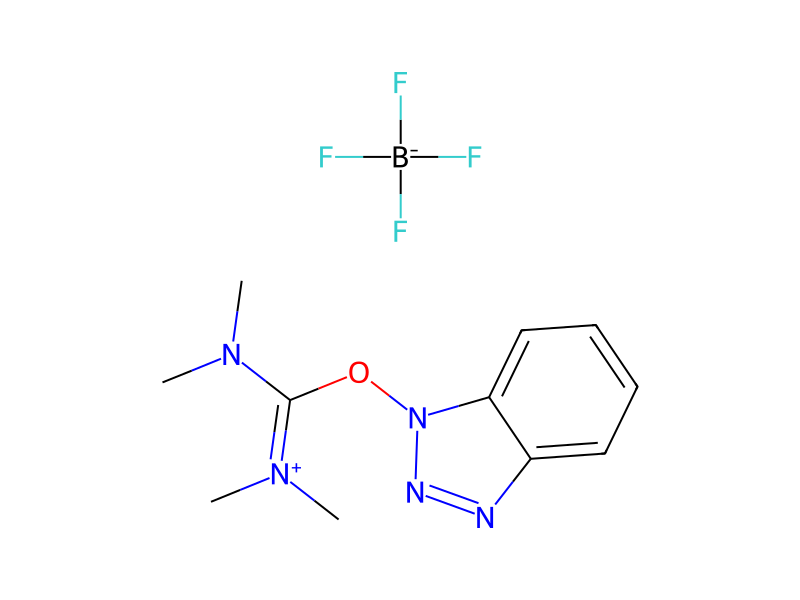
[CH3:1][C:2]1[N:7]=[C:6]([C:8]([OH:10])=O)[CH:5]=[CH:4][C:3]=1[N+:11]([O-:13])=[O:12].[N:14]1([CH2:20][CH2:21][NH2:22])[CH2:19][CH2:18][O:17][CH2:16][CH2:15]1.CN(C(ON1N=NC2C=CC=CC1=2)=[N+](C)C)C.[B-](F)(F)(F)F.CCN(C(C)C)C(C)C>C(Cl)Cl>[CH3:1][C:2]1[N:7]=[C:6]([C:8]([NH:22][CH2:21][CH2:20][N:14]2[CH2:19][CH2:18][O:17][CH2:16][CH2:15]2)=[O:10])[CH:5]=[CH:4][C:3]=1[N+:11]([O-:13])=[O:12]Participants
6
Reactant 4



Product 1

Reagents, catalysts & solvents 1

Procedure
To a solution of 6-methyl-5-nitropyridine-2-carboxylic acid (0.500 g, 3.0 mmol) in DCM (7 mL) were added 2-morpholin-4-ylethanamine (1.0 mL, 7.7 mmol), TBTU (0.992 g, 3.1 mmol), and DIEA (1.34 mL, 7.7 mmol). The reaction mixture was allowed to stir at rt overnight and then quenched with water. The organic solution was separated and the aqueous solution was extracted with DCM. The organic solutions were combined and concentrated. The residue was purified by column chromatography to give 6-methyl-N-(2-morpholin-4-ylethyl)-5-nitropyridine-2-carboxamide (0.27 g, 30%).
Workup
- customquenched with water
- customThe organic solution was separated
- extractionthe aqueous solution was extracted with DCM
- concentrationconcentrated
- customThe residue was purified by column chromatography
Sources & evidence
- ORD record
- ord-ff08ab09c3cf4114a31099a3b5740e01
- Source dataset
- uspto-grants-2011_08
- Patent number
- US07998952B2
Reaction notes
Loading…